
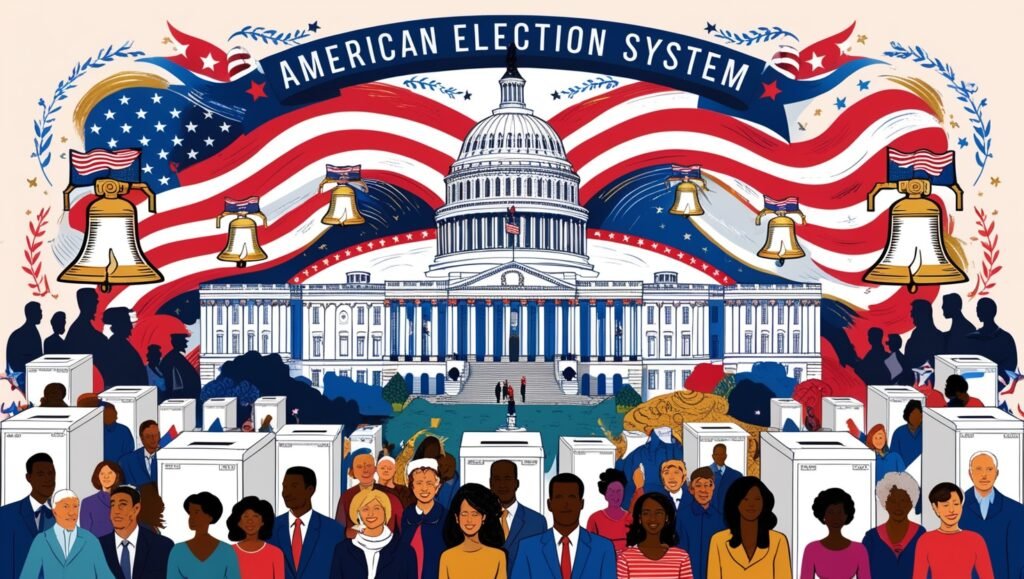
The American election system is complex, structured to ensure fair representation and uphold democracy across all levels of government. From the President to local officials, elections in the United States involve a multifaceted process that includes primaries, the Electoral College, and checks and balances at every stage. Here’s a closer look at how the system operates and some fascinating facts about American elections.
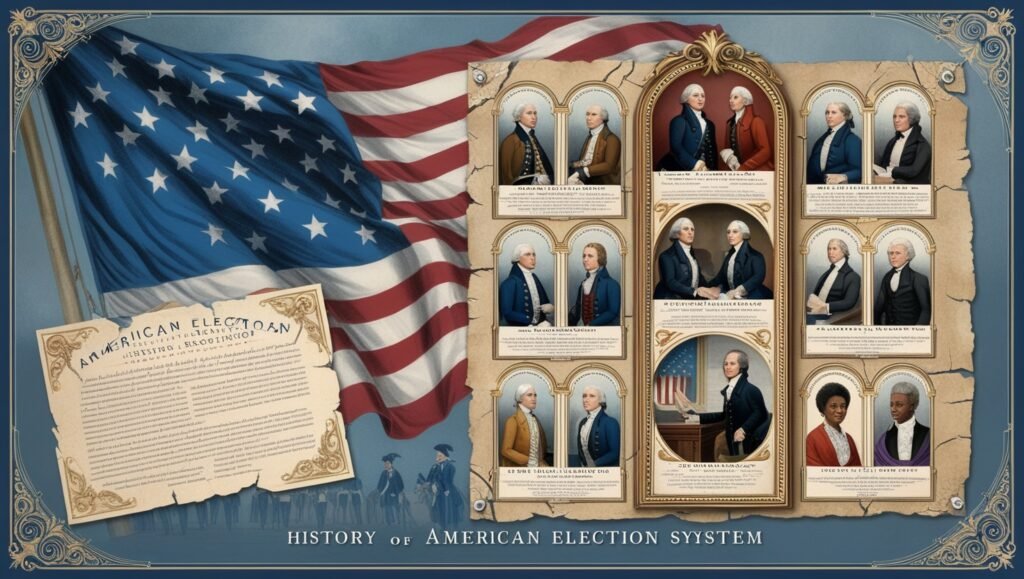
1. The Structure of U.S. Elections(American Election)
The United States operates under a Federal System, meaning elections occur at various levels:
- Federal Elections for the President, Vice President, and Congress members (House of Representatives and Senate).
- State Elections for governors, legislators, and other state officials.
- Local Elections for mayors, city council members, and school board officials.
Each of these levels has its rules and regulations, ensuring both national representation and local autonomy.
2. The Electoral College: A Unique Approach to Choosing a President
One of the most unique aspects of the U.S. system is the Electoral College:
- Each state has a set number of electoral votes, based on its population and representation in Congress.
- When citizens vote for the President, they’re essentially voting for electors in their state who have pledged to support a particular candidate.
- A candidate must secure 270 electoral votes out of 538 to win the presidency.
This system ensures that less populated states have a voice in the election, balancing the influence of both populous and smaller states.
Interesting Fact: It’s possible for a candidate to win the popular vote but lose the Electoral College, as seen in the 2000 and 2016 elections.
3. Primaries and Caucuses: The Road to Nomination
Before the main election, each political party holds primaries and caucuses to choose its nominee for President:
- Primaries are similar to general elections, where voters choose from among candidates on a ballot.
- Caucuses are meetings where party members gather, discuss, and vote on their preferred candidate.
Each state determines how it holds primaries or caucuses, often leading to diverse approaches in the nomination process.
Interesting Fact: Iowa holds the first caucus, and New Hampshire holds the first primary, making these states influential in shaping momentum for candidates.
4. The Voting Process: Absentee and Early Voting Options
Voting in the U.S. has evolved to offer varied options for voter convenience and accessibility: How does voting work in America
- In-Person Voting on Election Day remains the traditional approach.
- Early Voting allows voters to cast their ballots in person before Election Day, reducing lines and crowding.
- Absentee Voting provides ballots for those unable to visit polling locations due to travel, illness, or other reasons.
- Mail-In Voting became a prominent feature in the 2020 election due to the COVID-19 pandemic.
These options ensure that voting is accessible to a diverse population, fostering higher voter turnout.
Interesting Fact: Oregon was the first state to adopt an entirely vote-by-mail system for all elections.
5. Voter Registration: A Key Step in the Process
Unlike in some countries, voter registration is required for citizens to participate in U.S. elections:
- Registration Laws vary by state, and many states now offer online registration for convenience.
- Automatic Voter Registration is becoming popular, where citizens are registered automatically when engaging with certain government services unless they opt out.
Interesting Fact: North Dakota is the only U.S. state that does not require voter registration.
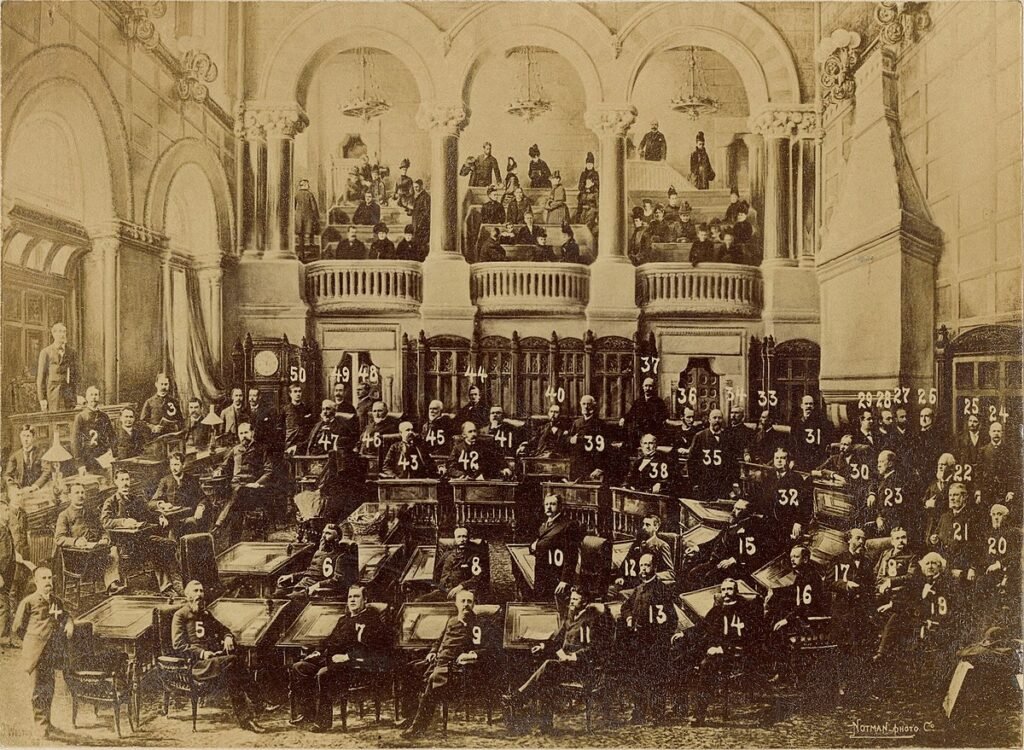
- 1888 Election
6. Interesting Historical Facts About U.S. Elections
- First Presidential Election: George Washington won the first U.S. presidential election in 1789. Interestingly, he was elected unanimously, receiving all electoral votes.
- First Televised Debate: In 1960, the first televised debate between John F. Kennedy and Richard Nixon marked a new era in campaign strategy, emphasizing the importance of media in politics.
- Youngest and Oldest Presidents: The youngest elected President was John F. Kennedy at 43, and the oldest elected was Joe Biden at 78.
7. Challenges and Controversies: Ongoing Debates in the System
The American election system is not without its challenges:
- Electoral College Reform: There is ongoing debate over whether the Electoral College should be reformed or abolished in favor of a popular vote system.
- Voter ID Laws: Some states require photo ID to vote, which has sparked debate over accessibility and voting rights.
- Gerrymandering: The drawing of district boundaries to favor one party remains a controversial issue affecting fair representation.
Conclusion: A System of Balance, Adaptation, and Democracy
The American election system is a complex balance between federalism and democracy, designed to accommodate a large and diverse population with varying needs and perspectives. From the Electoral College to primaries and general elections, the U.S. election system continues to evolve, facing new challenges and embracing advancements in technology and accessibility.
This intricate blend of rules and processes ensures fair representation and upholds the democratic values on which the United States was founded. With each election, the system demonstrates both the enduring spirit of American democracy and the resilience of its citizens’ right to shape their government.
Fact: The next U.S. presidential election will be held on November 5, 2024—marking the 60th presidential election in American history!
*Disclaimer:
Our website uses some AI-generated images to enhance the visual experience and illustrate content effectively. These images are created through artificial intelligence and may not always reflect real-life objects, people, or places. We aim to use AI images for artistic and educational purposes only. Please note that while we strive to ensure accuracy, some representations may vary or be symbolic in nature. The AI-generated images do not imply endorsements or affiliations with specific individuals or entities unless explicitly stated. For inquiries regarding image usage, or if you believe any content needs review, please feel free to contact us.
Brilliant
Thank you for your appreciation 🙏