
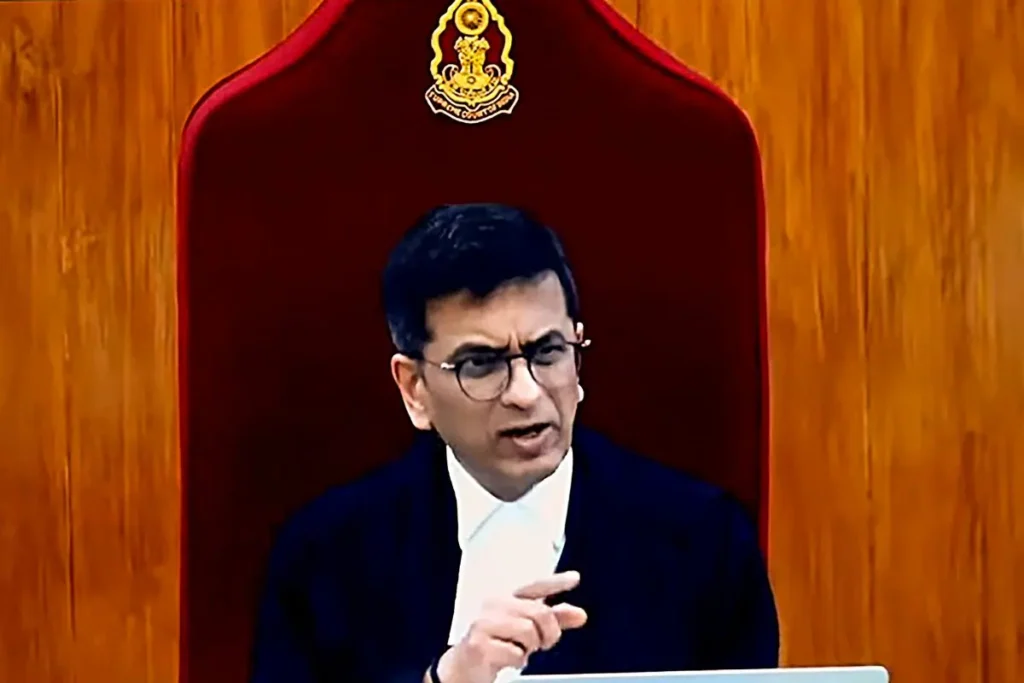
Chief Justice of India (CJI) Dhananjaya Yeshwant Chandrachud, commonly known as Justice D.Y. Chandrachud, has emerged as a prominent figure in the Indian judiciary, known for his progressive judgments and commitment to upholding constitutional principles. Appointed as the 50th Chief Justice of India on November 9, 2022, he brings a rich background, both in terms of legal acumen and his personal approach to justice. His tenure is marked by several landmark judgments and progressive legal interpretations that have shaped India’s judicial landscape.
1. Early Life and Background
- Birth: Justice D.Y. Chandrachud was born on November 11, 1959, in Maharashtra, India, to Justice Y.V. Chandrachud, who was also a distinguished Chief Justice of India, serving from 1978 to 1985—the longest tenure in the history of the Supreme Court of India.
- Education: He pursued a strong educational foundation in law:
- Undergraduate: Graduated in Economics from St. Stephen’s College, Delhi.
- Law Degree: Earned his LLB from Campus Law Centre, Delhi University.
- Further Studies: Attained a Doctorate in Juridical Sciences (SJD) from Harvard Law School, USA, and a Master’s in Law (LLM), specializing in areas such as Comparative Constitutional Law and International Human Rights Law.
2. Career Path
- Practicing Lawyer: Before entering the judiciary, Justice Chandrachud practiced as an advocate in the Bombay High Court and the Supreme Court of India, earning a reputation for his expertise in constitutional law, human rights, and labor law.
- Judicial Appointments:
- Appointed as a Judge in the Bombay High Court in 2000, where he served for over a decade.
- Became the Chief Justice of the Allahabad High Court in 2013, where he made significant contributions to public interest litigations.
- Appointed as a Judge of the Supreme Court of India on May 13, 2016, marking the beginning of a transformative era in the highest court of India.
- Elevated as the 50th Chief Justice of India on November 9, 2022. His tenure as CJI is expected to last until November 10, 2024.
3. Notable Judgments and Legal Contributions
Justice D.Y. Chandrachud is known for his forward-thinking judgments on issues like individual rights, gender equality, privacy, and social justice. Some of his notable cases include:
- Right to Privacy (Puttaswamy v. Union of India, 2017):
- Justice Chandrachud played a pivotal role in the landmark Right to Privacy judgment, asserting that privacy is a fundamental right under Article 21 of the Indian Constitution.
- This judgment impacted the legal discourse on issues such as data protection, surveillance, and individual autonomy in India.
- Decriminalization of Section 377 (Navtej Singh Johar v. Union of India, 2018):
- Justice Chandrachud was part of the bench that decriminalized Section 377 of the Indian Penal Code, which previously criminalized consensual homosexual relationships.
- The judgment emphasized equality, dignity, and individual autonomy, marking a historic moment for LGBTQ+ rights in India.
- Sabarimala Verdict (Indian Young Lawyers Association v. State of Kerala, 2018):
- He supported the verdict allowing women of all ages to enter the Sabarimala Temple in Kerala, which was traditionally restricted to women of menstruating age.
- His opinion underscored gender equality and challenged patriarchal traditions, though this decision also sparked a nationwide debate and further review petitions.
- Adultery Law (Joseph Shine v. Union of India, 2018):
- Justice Chandrachud was on the bench that struck down Section 497, which criminalized adultery, calling it an outdated law that treated women as the property of their husbands.
- This judgment upheld the right to privacy and equality within the institution of marriage, removing an archaic and gender-biased law.
- Ayodhya Verdict (2019):
- As part of the bench, Justice Chandrachud ruled on the Ayodhya land dispute, awarding the disputed land to the Hindu parties and allotting an alternative plot to the Muslim parties.
- Although this decision was controversial, it emphasized the need for a balanced approach to a long-standing religious and political issue.
- COVID-19 Management and Accountability:
- During the COVID-19 pandemic, Justice Chandrachud was active in holding the government accountable regarding issues like oxygen supply, vaccine distribution, and migrant worker welfare.
- His emphasis on transparency and accountability reflected his commitment to upholding the fundamental right to life and health.
- Live Streaming of Court Proceedings:
- Justice Chandrachud has been a strong advocate for transparency and accessibility in the judicial process, supporting the live streaming of Supreme Court proceedings to allow public access and reduce misconceptions about court procedures.
4. Reforms and Innovations
Justice Chandrachud is known for advocating various reforms aimed at modernizing the Indian judiciary, making it more efficient, transparent, and accessible.
- Judicial Transparency: Strong advocate for live streaming of court cases and accessibility to court documents to increase transparency.
- Digitalization Initiatives: Promoted initiatives like e-filing systems and virtual court hearings to facilitate access to justice, especially during the COVID-19 pandemic.
- Expanding Judicial Access: Committed to increasing the judiciary’s reach to underserved communities, making justice more inclusive for all sections of society.
5. Philosophy and Judicial Outlook
Justice D.Y. Chandrachud is seen as a liberal and progressive judge, often prioritizing individual rights, equality, and social justice. His approach emphasizes a broad interpretation of the Constitution, focusing on evolving societal needs and the importance of upholding human dignity and equality.
- Human Rights and Dignity: His judgments reflect a deep respect for individual dignity and autonomy, whether on issues related to privacy, gender rights, or personal freedoms.
- Progressive Interpretations: Known for his modern approach to constitutional interpretation, often aligning with evolving global human rights standards.
- Accountability and Governance: Frequently emphasizes government accountability, often intervening in matters of public interest and advocating for transparency in governance.
6. Vision and Approach as Chief Justice of India
As CJI, Justice Chandrachud has brought a transformative vision to India’s judiciary, focusing on transparency, efficiency, and inclusivity.
- Judicial Reforms:
- Use of Technology: Under his leadership, the Supreme Court has adopted virtual hearings and online filing systems, helping reduce the backlog of cases and providing broader access to justice.
- Transparency and Accountability: He has advocated for transparent decision-making processes, including live streaming of Supreme Court proceedings, which has allowed citizens direct access to judicial discussions.
- Gender Sensitivity and Inclusivity: Justice Chandrachud has been an advocate for gender inclusivity within the judiciary. He supports increased representation of women in the judiciary and has implemented measures to create safer and more inclusive court environments.
- Access to Justice: A strong proponent of legal aid and equal access to justice, he has championed initiatives to provide legal assistance to marginalized and underprivileged sections of society.
- Mental Health Advocacy: In his judgments and speeches, he has often highlighted the need for judicial empathy towards individuals with mental health issues, promoting awareness and legal frameworks to support mental health care.
7. Fascinating Facts about Justice D.Y. Chandrachud
- Father-Son Legacy: Justice D.Y. Chandrachud and his father, Justice Y.V. Chandrachud, are the only father-son duo to serve as Chief Justices of India.
- Champion of Dissent: Known for his courage in dissenting on sensitive issues, Justice Chandrachud’s dissent in the Aadhaar case has been widely appreciated for its foresight and commitment to individual freedoms.
- Reformer with Compassion: He is widely admired for his compassionate approach to law, focusing on how legal decisions impact real lives rather than purely theoretical aspects.
- Pioneer of Live Streaming: His advocacy for live-streaming court proceedings has democratized judicial access, making it easier for citizens to witness high-profile cases.
- Author of Insightful Opinions: His judgments are known for their literary quality and depth, with references to philosophy, literature, and comparative law.
8. Noteworthy Facts and Public Perception
- Longest Serving Father-Son Duo: Justice D.Y. Chandrachud and his father, Justice Y.V. Chandrachud, hold the unique distinction of being the only father-son duo to serve as Chief Justices of India.
- Respected Legal Scholar: Justice Chandrachud is widely respected not only for his judgments but also for his academic contributions and lectures on constitutional law, which have impacted both Indian and international legal circles.
- Global Recognition: He has represented India in various international conferences and is known globally for his expertise in constitutional law, human rights, and judicial reform.
9. Criticisms and Challenges
While Justice Chandrachud is widely respected, he has faced criticism, especially for his stand on certain contentious issues such as the Sabarimala verdict and privacy rights. However, his commitment to constitutional principles and his vision of an inclusive and progressive judiciary remain his defining characteristics.
Conclusion
Chief Justice D.Y. Chandrachud stands as a transformative figure in the Indian judiciary, striving for a more transparent, accessible, and humane justice system. His judgments continue to redefine traditional norms, reflecting his dedication to social justice, human rights, and the principles enshrined in the Constitution. His contributions will undoubtedly leave a lasting impact on the judicial landscape in India and serve as an inspiration to future generations of legal minds.
*Disclaimer:
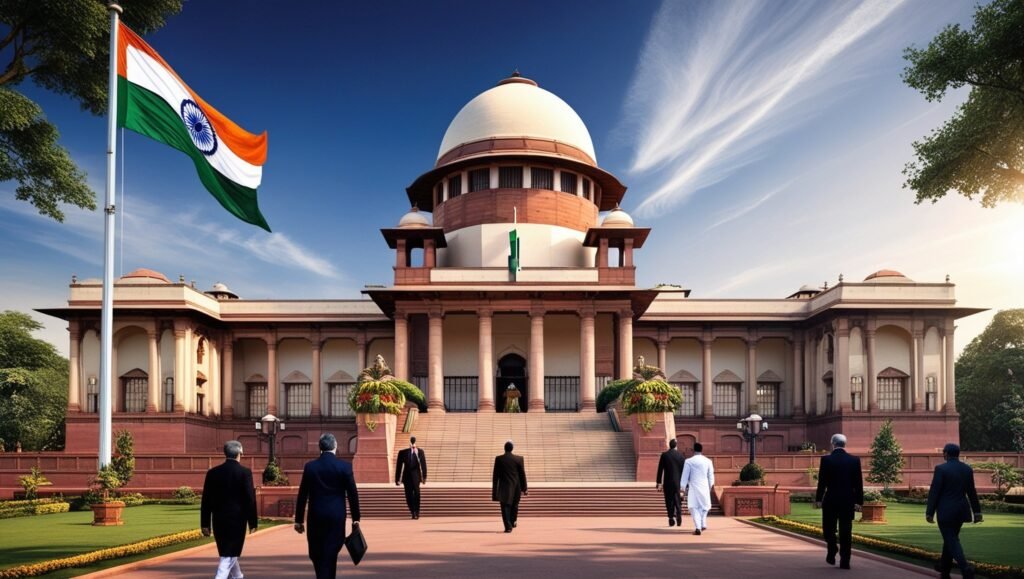
Our website uses some AI-generated images to enhance the visual experience and illustrate content effectively. These images are created through artificial intelligence and may not always reflect real-life objects, people, or places. We aim to use AI images for artistic and educational purposes only. Please note that while we strive to ensure accuracy, some representations may vary or be symbolic in nature. The AI-generated images do not imply endorsements or affiliations with specific individuals or entities unless explicitly stated. For inquiries regarding image usage, or if you believe any content needs review, please feel free to contact us.