
6. Formation of the Indian National Army (INA)
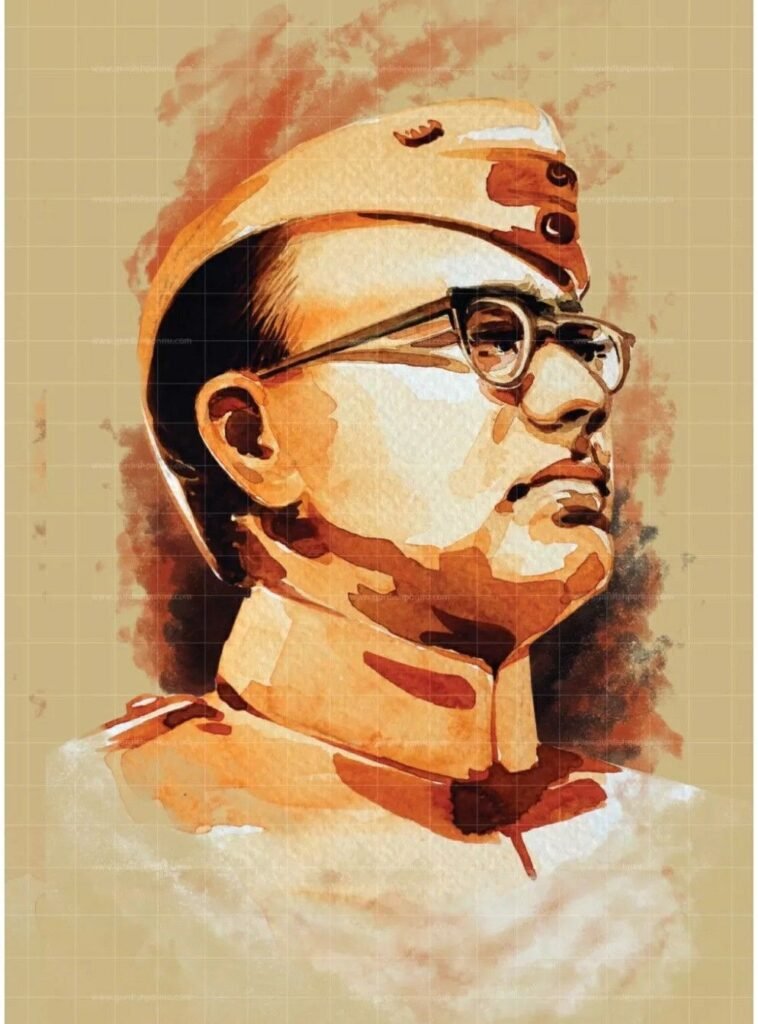
The formation of the Indian National Army (INA), also known as Azad Hind Fauj, was one of the most significant and dramatic chapters in India’s struggle for independence. Spearheaded by Subhas Chandra Bose, the INA symbolized his revolutionary vision of using armed force to achieve India’s freedom. The INA not only represented a formidable military force but also became a powerful symbol of defiance against British colonial rule. Bose’s determination to create an army that would fight alongside the Axis powers during World War II marked a critical phase in his quest for independence.
Background: Bose’s Ideological Shift
By 1941, after escaping from British India, Bose sought to gain support from the Axis Powers (primarily Nazi Germany and Imperial Japan) to challenge British rule. His core belief was that India could only gain freedom through a struggle that would be both internal (through the efforts of Indian revolutionaries) and external (by exploiting the geopolitical situation of World War II).
Bose saw the opportunity presented by the war as a means to advance his revolutionary cause. The Axis powers were at war with Britain, and Bose understood that they could potentially provide the military resources and political support necessary for the independence movement. After reaching Berlin and receiving a warm welcome from the Nazi regime, Bose made contacts with Japanese military officials, who shared his desire to weaken British control over colonies in Asia.
Collaboration with Japan
Bose’s initial contacts with the Axis powers, particularly Nazi Germany, did not lead to significant progress in terms of military aid. However, his relationship with Japan proved more fruitful. Japan had already conquered several parts of Southeast Asia, including Burma (now Myanmar), Malaya, and Singapore, which had large Indian populations. Bose saw these regions as fertile ground to mobilize Indian soldiers and create an army that could fight against the British.
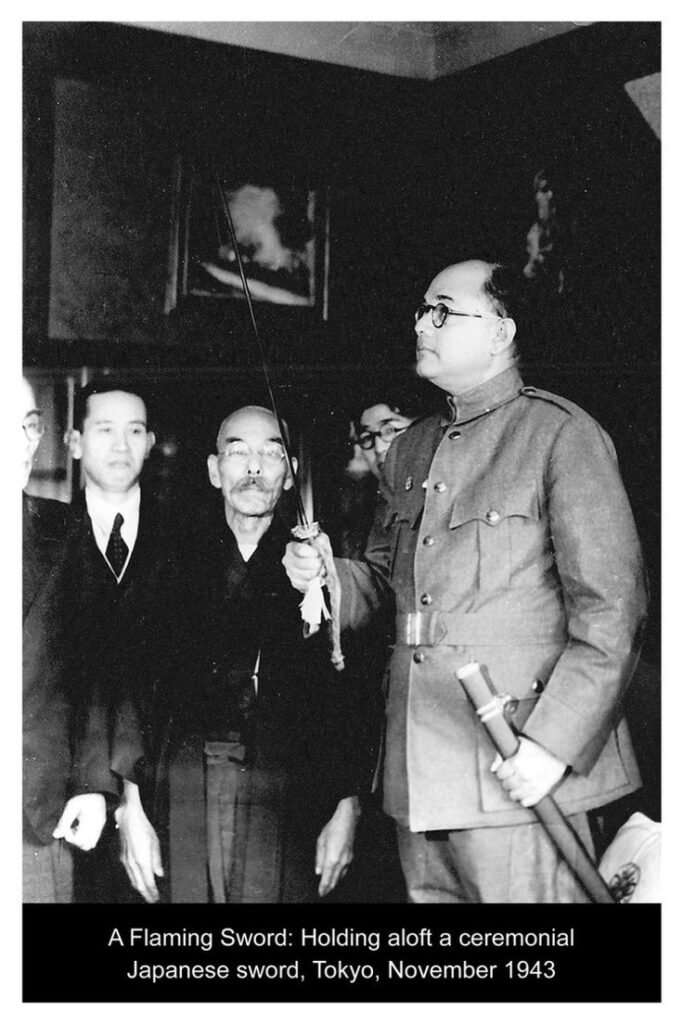
In 1942, the Japanese military leaders agreed to support Bose’s vision for an armed struggle. The Japanese captured the Andaman and Nicobar Islands and handed them over to Bose’s control, providing him with a base of operations in the Indian Ocean.
Formation of the Indian National Army (INA)
The INA was officially formed in September 1942 in Singapore, though its roots can be traced back to earlier efforts. The first formation of the INA had been established under the leadership of Captain Mohan Singh by the Japanese, who had taken over prisoners of war (POWs) from the British Indian Army. However, this first attempt lacked the leadership and structure to be truly effective.
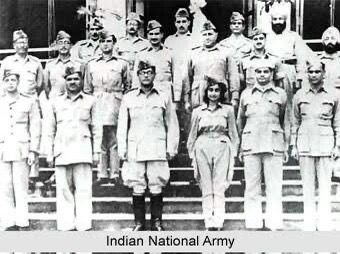
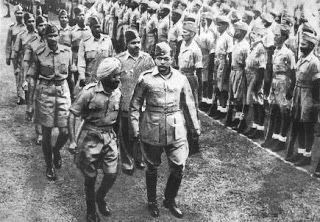
Bose took charge of the INA in 1943, after convincing the Japanese authorities to let him lead the army. He revitalized the INA, transforming it into a more organized and motivated force.
Bose’s Leadership and the Role of the INA
Once in charge, Subhas Chandra Bose rapidly expanded the INA and infused it with his revolutionary zeal. His charismatic leadership played a crucial role in motivating the soldiers, many of whom were former British Indian Army personnel captured by the Japanese. Bose gave the army a clear sense of purpose, and under his guidance, the INA grew in size and strength, with recruitment camps established in Japanese-occupied regions like Singapore, Malaya, and Thailand.
- Formation of the INA’s Core Units:
Bose sought to create a professional and well-disciplined army. The INA was structured similarly to the British Indian Army, with divisions, regiments, and specialized units. The INA’s First Division was composed of soldiers who had previously been part of the British Indian Army. - Indian Women’s Regiment:
One of Bose’s most remarkable achievements was the formation of the Rani of Jhansi Regiment, the first all-female military unit in India’s history. It was composed of Indian women volunteers, primarily from Southeast Asia, who were trained as soldiers and combatants. This regiment symbolized the significant role that women could play in the independence struggle. - Symbol and Motto:
The INA adopted several symbolic representations, including the Indian Tricolor Flag and the slogan “Jai Hind!” (Victory to India), which later became a national slogan. Bose’s idea was to create a sense of unity and national pride within the army.
The INA’s Campaigns and Operations
In 1944, the INA began its military operations against the British forces in Burma (now Myanmar) with the goal of advancing toward India’s northeastern borders. The Battle of Imphal was a crucial military campaign where the INA, alongside the Japanese, tried to capture the key city of Imphal in the Indian state of Manipur. While the battle ended in failure due to heavy casualties and logistical challenges, it marked the first large-scale attempt by Indian soldiers to engage in direct combat against British forces on Indian soil.
Despite the eventual retreat of the INA, the battle was symbolic in demonstrating that Indian soldiers, under Bose’s leadership, were willing to sacrifice their lives for the cause of independence.
The INA’s Impact on Indian Nationalism
Though the INA did not achieve its military objectives, its impact on India’s nationalist movement was profound. The INA brought a new dimension to the struggle for independence, moving from non-violent resistance to an armed revolutionary movement.
- Inspiration to Indian Youth:
The INA galvanized a new generation of Indians, particularly the youth, to actively join the struggle for freedom. Bose’s rhetoric and leadership inspired millions, and the INA’s commitment to military resistance helped break the monopoly that the Congress Party’s peaceful struggle had on the nationalist movement. - The INA Trials:
After India’s independence, the British government’s decision to put INA soldiers on trial for treason led to widespread protests across India. The trials created public outrage, and many Indians, including Congress leaders, supported the INA soldiers. The trials not only helped rally the masses against the British but also weakened British authority, demonstrating the growing power of the Indian nationalist movement.
Bose’s Vision for the INA and the Future of India
Subhas Chandra Bose envisioned the INA as more than just a military force—it was a symbol of India’s future post-independence. He believed that India’s freedom could only be secured through strength, unity, and discipline, principles he sought to instill within the INA. Though the army did not succeed in liberating India, Bose’s vision for an independent, self-reliant India inspired future generations.
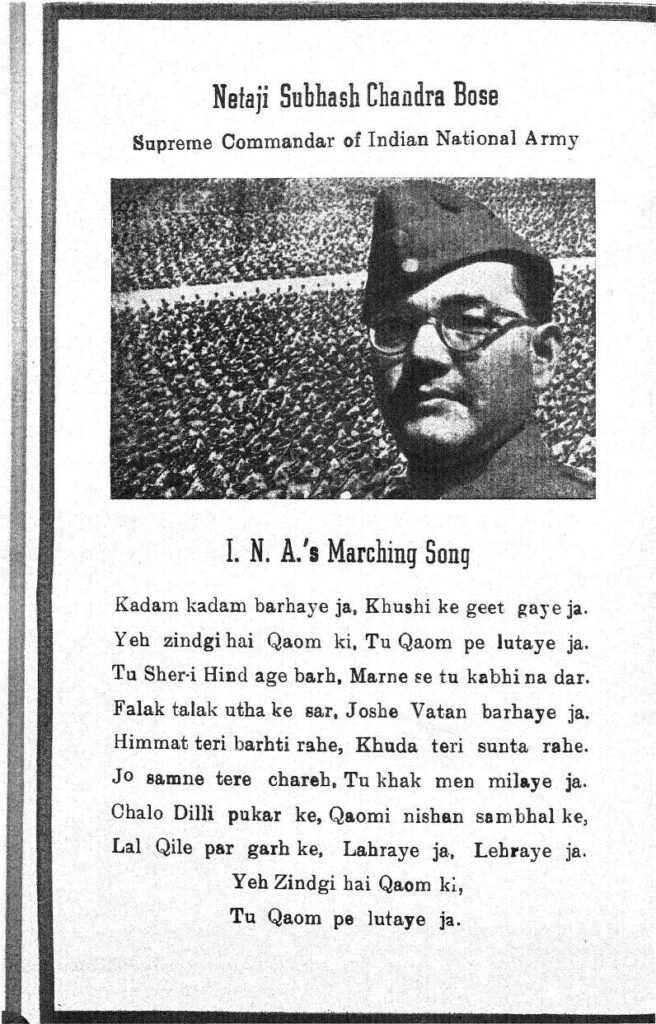
The Legacy of the Indian National Army
The formation of the Indian National Army under the leadership of Subhas Chandra Bose remains a key turning point in the Indian independence struggle. While the INA was unable to directly bring down British rule, its role in inspiring the Indian masses, particularly the youth, cannot be overstated. Bose’s military leadership, his ability to inspire and organize people across ethnic, linguistic, and regional divides, and his commitment to a free and independent India left a lasting legacy. The INA symbolizes the indomitable will and courage of those who fought for India’s freedom through armed resistance, and Subhas Chandra Bose’s vision continues to inspire millions even today.
7. The Provisional Government of Free India: Azad Hind Sarkar
The establishment of the Provisional Government of Free India (Azad Hind Sarkar) in 1943 was one of Subhas Chandra Bose’s most defining achievements in the Indian freedom struggle. This bold and revolutionary step not only challenged the legitimacy of British colonial rule but also provided a practical framework for envisioning an independent Indian state. Through the Azad Hind Sarkar, Bose sought to unite Indians under a single banner of independence and mobilize international support for the cause.
Background: Bose’s Vision for an Independent India
After gaining control of the Indian National Army (INA) and securing the support of the Axis Powers, Bose sought to take the fight for India’s independence to a global stage. While armed struggle through the INA was a crucial part of his strategy, Bose also recognized the importance of creating a political and administrative entity that would represent India as an independent nation. This vision culminated in the establishment of the Azad Hind Sarkar, a provisional government operating in exile.
The formation of this government was meant to achieve several objectives:
- To assert India’s sovereignty: By creating a provisional government, Bose aimed to delegitimize British authority in India.
- To garner international recognition: A formal government would enable Bose to seek diplomatic support and military aid from other nations.
- To unify Indians globally: The Azad Hind Sarkar symbolized a collective effort by Indians, both in India and abroad, to fight for their freedom.
Formation of the Azad Hind Sarkar
The Provisional Government of Free India was formally established on October 21, 1943, in Singapore. The government was inaugurated with a grand ceremony, during which Bose delivered a fiery speech outlining its objectives and calling upon Indians worldwide to support the freedom struggle.
- Leadership Structure:
- Subhas Chandra Bose assumed the role of Head of State, Prime Minister, and Minister of War and Foreign Affairs.
- The government included a cabinet of ministers responsible for various portfolios, including finance, propaganda, and women’s affairs.
- National Symbols:
- The Tricolor flag was adopted as the national flag, symbolizing unity, sacrifice, and progress.
- The slogan “Jai Hind!”, popularized by Bose, became the official salutation of the Azad Hind Sarkar.
- Territorial Base:
- The government declared its jurisdiction over territories in Southeast Asia and parts of northeastern India, including the Andaman and Nicobar Islands, which were handed over to Bose by the Japanese in December 1943.
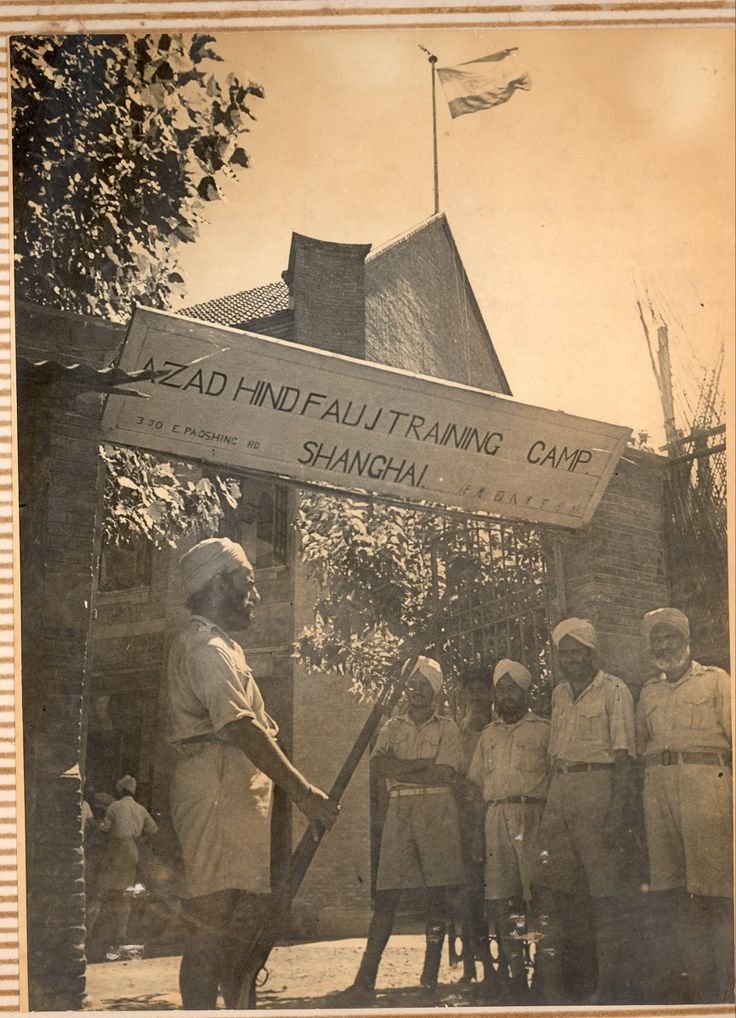
Policies and Objectives of the Azad Hind Sarkar
The Azad Hind Sarkar was more than a symbolic entity; it aimed to function as a legitimate government capable of providing leadership to the freedom movement.
- Mobilizing Resources:
Bose called upon Indians living in Southeast Asia to contribute to the INA and the provisional government. Donations in the form of money, gold, and other resources were collected to fund the war effort. - Diplomatic Outreach:
The Azad Hind Sarkar sought recognition from other nations, particularly the Axis powers. It gained formal recognition from Japan, Germany, Italy, and several other countries, which lent credibility to its claim as the legitimate government of India. - Military Strategy:
The government’s primary focus was on leading the Indian National Army in its campaign against British forces. Bose emphasized the importance of armed struggle and called for complete dedication from INA soldiers and supporters. - Economic Policies:
Bose envisioned a socialist framework for independent India, focusing on economic equality, industrial development, and the welfare of the working class. - Inclusion of Women:
The government strongly promoted the participation of women in the freedom struggle. The establishment of the Rani of Jhansi Regiment, an all-female combat unit of the INA, was a direct reflection of this policy.
Role of the Azad Hind Sarkar in the Freedom Struggle
- Symbol of Unity and Sovereignty:
The Azad Hind Sarkar became a rallying point for Indians around the world. It symbolized the possibility of a united and independent India, free from British domination. - Direct Military Engagement:
Under the leadership of the Azad Hind Sarkar, the INA launched military campaigns against British forces in Burma (Myanmar) and India’s northeastern frontiers, including the Battle of Imphal. These campaigns, though ultimately unsuccessful, demonstrated the determination and capability of Indian revolutionaries to challenge British military power. - International Diplomacy:
The government’s recognition by major powers like Japan and Germany provided a platform for Bose to advocate for India’s independence on the global stage. It also brought international attention to the Indian freedom struggle. - Challenging British Authority:
The existence of the Azad Hind Sarkar undermined the British claim to represent India’s interests. It exposed the fragility of British colonial rule and inspired widespread resistance within India.
Challenges Faced by the Azad Hind Sarkar
- Dependence on Axis Powers:
The government relied heavily on support from Japan and Germany, which limited its autonomy. The defeat of the Axis powers in World War II significantly weakened the Azad Hind Sarkar’s position. - Lack of Territorial Control:
While the government claimed jurisdiction over Indian territories, its actual control was limited to areas occupied by Japanese forces. This restricted its ability to function as a fully independent entity. - Military Defeats:
The INA’s failure to achieve major victories on the battlefield, particularly in the Battle of Kohima and the Battle of Imphal, weakened the government’s credibility and led to its eventual collapse. - British Counteractions:
The British government responded to the Azad Hind Sarkar by intensifying its propaganda and military efforts to suppress the INA and discredit Bose’s leadership.
Legacy of the Azad Hind Sarkar
- Inspiration for Indian Nationalism:
The establishment of the Azad Hind Sarkar and the INA’s campaigns inspired millions of Indians, both at home and abroad. It proved that Indians were capable of organizing a government and military force to challenge colonial rule. - Impact on the British Empire:
The INA’s activities and the Azad Hind Sarkar’s existence highlighted the growing unpopularity of British rule in India. The subsequent INA Trials (1945), in which INA soldiers were charged with treason, sparked widespread protests across India and weakened British authority. - A Vision of a United India:
Bose’s emphasis on religious and cultural unity within the Azad Hind Sarkar served as a powerful counter-narrative to the divisive policies of the British. It promoted the idea of a secular, inclusive, and sovereign India.
A Revolutionary Government in Exile
The Azad Hind Sarkar, under the leadership of Subhas Chandra Bose, represented a bold and innovative approach to the Indian freedom struggle. By creating a provisional government in exile, Bose challenged the legitimacy of British colonial rule and showcased the potential of a free and united India. While the government ultimately dissolved with the defeat of the Axis powers in World War II, its legacy continues to inspire generations of Indians, serving as a testament to Bose’s indomitable spirit and visionary leadership.
8. Subhas Chandra Bose’s Mysterious Disappearance and Enduring Legacy
The mysterious circumstances surrounding the disappearance of Subhas Chandra Bose remain one of the most debated and enigmatic events in Indian history. On August 18, 1945, it was reported that Bose died in a plane crash in Taipei, Taiwan, while on his way to seek further support for India’s freedom struggle. However, this official account has been shrouded in mystery, with conflicting evidence and numerous theories about what truly happened. His disappearance created a vacuum in the Indian independence movement and cemented his legacy as a revolutionary hero whose life continues to inspire.
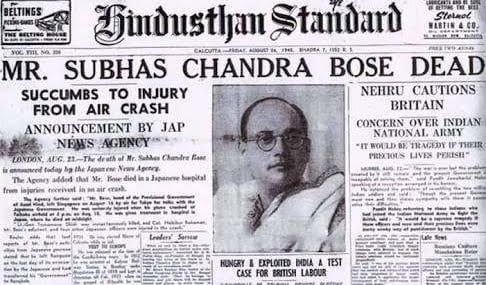
The Reported Plane Crash: August 18, 1945
According to official Japanese accounts, Bose boarded a Japanese military plane in Saigon (now Ho Chi Minh City) on August 17, 1945, heading to Tokyo via Taipei. The purpose of the journey was to reorganize and find new avenues for continuing his fight for India’s independence after the defeat of Japan in World War II.
- The Accident:
The plane reportedly crashed at the Matsuyama Airfield in Taipei due to engine failure shortly after takeoff on August 18, 1945. Bose was severely burned and was taken to a nearby military hospital, where he succumbed to his injuries later that evening. The Japanese authorities cremated his body, and his ashes were sent to the Renkoji Temple in Tokyo. - The Official Account:
- The Japanese and some Indian National Army (INA) officials corroborated this version of events.
- The Allied Forces, particularly the British, conducted investigations and initially accepted the crash story.
Controversies and Alternate Theories
Despite the official account, many Indians doubted the plane crash story, fueling alternate theories about Bose’s fate. Several factors contributed to this skepticism:
- Lack of Conclusive Evidence:
- There were no photographs, detailed medical records, or credible eyewitness testimonies to confirm Bose’s death.
- The secrecy surrounding the Japanese handling of the incident added to doubts.
- Eyewitness Accounts Contradicting the Crash:
Some INA soldiers and other individuals claimed to have seen Bose alive after the reported crash, suggesting he faked his death to evade capture by the British or Allied forces. - Theories of Escape:
Several theories emerged over the decades, including:- Soviet Union Connection: Bose fled to the Soviet Union for asylum and continued his struggle from there.
- Monk Disguise: Bose lived incognito in India as a monk, with notable claims associating him with Gumnami Baba, a mysterious figure who lived in Uttar Pradesh.
- Other Refugee Locations: There were speculations about Bose settling in China, Japan, or other Asian countries under a new identity.
- Political Exploitation:
Bose’s mysterious disappearance became a rallying point for various political groups, with his name and legacy invoked in diverse ways to inspire or mobilize support.
Official Investigations
Over the years, the Indian government set up multiple commissions to investigate Bose’s disappearance:
- Shah Nawaz Committee (1956):
This committee supported the plane crash theory but faced criticism for relying heavily on Japanese testimonies without independent verification. - Khosla Commission (1970):
The commission concluded that Bose died in the plane crash but failed to address many discrepancies in the evidence. - Mukherjee Commission (1999-2005):
This commission refuted the plane crash theory, citing inconsistencies and lack of evidence, but did not establish any alternate conclusion regarding Bose’s fate.
The Impact of His Disappearance
- A Symbolic Martyrdom:
Bose’s disappearance turned him into a larger-than-life figure, a revolutionary whose unresolved fate symbolized the unfinished struggle for justice and equality. - Preserving Unity:
Some historians suggest that Bose’s mysterious end helped avoid potential discord among freedom fighters. His absence ensured that his revolutionary ideals remained untainted by political compromises during India’s transition to independence. - Fuel for Revolutionary Movements:
His mysterious disappearance and presumed death inspired many post-independence revolutionary movements and leaders, who saw Bose as an enduring symbol of resistance against oppression.
Subhas Chandra Bose’s Enduring Legacy
While his fate remains unresolved, Bose’s life and ideals have left an indelible mark on India and the world. His disappearance added to the mystique surrounding his persona, ensuring his memory remains alive across generations.
- Jai Hind:
Bose’s slogan “Jai Hind!” became a national salutation, symbolizing his vision of unity and patriotism. - Global Recognition:
Bose’s efforts to establish international alliances and the Provisional Government of Free India highlighted the global dimensions of India’s independence struggle. - Inspiration for Future Generations:
Bose’s revolutionary ideals and his commitment to self-sacrifice inspire countless individuals to work for justice, equality, and national pride. - Institutions and Tributes:
Numerous institutions, roads, and memorials are named after him, ensuring his contributions remain a visible part of India’s heritage. The Netaji Subhas Chandra Bose International Airport in Kolkata and the Netaji Subhas University of Technology are prominent examples. - Cultural Reverence:
Bose’s life has been immortalized in books, films, and music, making him a cultural icon. His ideals continue to resonate in India’s political and social discourse.
A Hero Beyond Mortality
The mysterious disappearance of Subhas Chandra Bose adds a layer of intrigue to his already extraordinary life. Whether he perished in the plane crash or survived to live in obscurity, Bose remains an immortal figure in the annals of history. His vision, courage, and determination to secure India’s freedom, often at great personal risk, ensure that his legacy continues to inspire Indians and freedom fighters worldwide. Bose’s life and disappearance serve as a poignant reminder of the sacrifices made for India’s independence and the enduring power of his revolutionary spirit.
9. Subhas Chandra Bose’s Legacy and His Enduring Influence on Modern India
Subhas Chandra Bose’s legacy transcends his contributions to India’s freedom struggle, embodying courage, determination, and a vision for a united and self-reliant nation. Bose remains one of India’s most revered freedom fighters, and his ideologies and actions continue to inspire political, social, and cultural discourse in modern India. His legacy serves as a reminder of the relentless pursuit of justice and freedom, not only in India but across the world.
Political Legacy: A Revolutionary Leader
Subhas Chandra Bose’s unique approach to achieving independence through armed struggle and international alliances set him apart from his contemporaries. His political legacy can be understood through his principles, vision, and the institutions he created.
- Radical Nationalism:
Bose rejected the idea of compromise with the British, advocating for complete and uncompromising independence. His emphasis on decisive action inspired many post-independence political movements in India. - International Alliances:
By aligning with the Axis powers during World War II, Bose brought international attention to India’s freedom struggle. While controversial, his diplomatic efforts underscored the global nature of the fight against colonialism. - Influence on Political Thought:
Bose envisioned a socialist India where industrialization, social equity, and economic self-reliance would be the cornerstones of governance. His ideals influenced India’s policies post-independence, particularly in areas like economic planning and industrial development.
Social Legacy: Uniting a Diverse Nation
Bose’s life and leadership were dedicated to fostering unity among Indians, irrespective of caste, religion, or ethnicity. This vision of a united India remains a cornerstone of his legacy.
- Promotion of Secularism:
Bose emphasized the importance of religious harmony and cultural inclusivity. His leadership of the Indian National Army (INA) showcased this commitment, as it was composed of soldiers from various religious and social backgrounds. - Empowerment of Women:
Bose was a staunch advocate for women’s participation in the freedom struggle. His establishment of the Rani of Jhansi Regiment, an all-women combat unit, was groundbreaking and symbolized his belief in gender equality. - Youth Inspiration:
Bose’s life and actions inspired generations of young Indians to fight for justice, equality, and self-reliance. Even today, his fiery speeches and writings continue to resonate with India’s youth.
Cultural Legacy: A Symbol of Patriotism
Subhas Chandra Bose became a cultural icon in India, with his life and ideals immortalized in various forms of art and media.
- Symbolism of “Netaji”:
The title “Netaji,” meaning “Respected Leader,” encapsulates Bose’s enduring role as a leader who represented the aspirations of the masses. - Jai Hind:
Bose’s slogan “Jai Hind!” became a national salutation, symbolizing his vision of unity and pride. It continues to evoke patriotism in India. - Art, Literature, and Media:
Bose’s life has inspired countless biographies, novels, films, and documentaries. These cultural expressions ensure that his legacy remains alive in public memory. - Tributes and Memorials:
Numerous institutions, landmarks, and memorials have been named after Bose, including the Netaji Subhas Chandra Bose International Airport in Kolkata and the Netaji Subhas National Institute of Sports. These serve as constant reminders of his contributions to the nation.
Subhas Chandra Bose’s Vision for Modern India
Bose’s vision extended beyond the immediate goal of independence. He dreamed of an India that was self-reliant, socially equitable, and respected on the global stage.
- Economic Independence:
Bose believed in economic self-sufficiency, advocating for industrialization and technological advancement to free India from reliance on foreign powers. - Social Reforms:
Bose emphasized the need for education, healthcare, and social justice to uplift all sections of society. His vision of an egalitarian India remains relevant in the context of contemporary socio-economic challenges. - Global Leadership:
Bose aspired for India to play a significant role in global affairs, advocating for a strong and independent foreign policy.
Impact on Modern India
- Inspiration for Political Movements:
Bose’s methods and ideology influenced various post-independence movements, including those advocating for social justice, economic reforms, and grassroots activism. - Strengthening National Identity:
Bose’s emphasis on unity and self-reliance contributed to the strengthening of India’s national identity, inspiring citizens to take pride in their cultural heritage. - Ongoing Relevance:
- Bose’s ideals of secularism, women’s empowerment, and social equity are critical in addressing modern challenges like communal tensions, gender inequality, and socio-economic disparities.
- His vision of a technologically advanced and economically independent India aligns with contemporary aspirations for global competitiveness.
Challenges and Controversies Surrounding His Legacy
- Alignment with the Axis Powers:
Bose’s alliance with Germany and Japan remains a subject of debate. Critics argue that this association tainted his legacy, while supporters contend it was a pragmatic decision in the fight for independence. - Marginalization in Mainstream Narratives:
Some believe that Bose’s contributions have not been adequately acknowledged in India’s official history, overshadowed by the non-violent methods of leaders like Mahatma Gandhi. - Unresolved Questions:
The mystery surrounding Bose’s disappearance continues to fuel speculation and debates, occasionally overshadowing his achievements and contributions.
A Timeless Icon of Resistance and Revolution
Subhas Chandra Bose’s legacy is not confined to history books; it lives on in the hearts of millions. His life serves as a testament to the power of determination, sacrifice, and visionary leadership.
- Global Recognition:
Bose is remembered not only in India but also in countries like Japan, Germany, and Southeast Asia, where his efforts left a lasting impact. - Educational Influence:
Bose’s writings and speeches are studied in schools and universities, ensuring that his revolutionary spirit continues to inspire young minds. - A Beacon of Hope:
For people fighting oppression and injustice worldwide, Bose remains a symbol of resilience and hope.
Conclusion:
The Immortal “Netaji”
Subhas Chandra Bose’s legacy is a blend of valor, intellect, and unwavering commitment to the nation. His life exemplifies the power of vision and action in overcoming challenges. Even decades after his disappearance, Bose’s ideals and contributions continue to shape India’s journey as a sovereign nation. His enduring influence is a reminder of the sacrifices made for freedom and the responsibility to uphold the principles he fought for: unity, equality, and self-reliance.
Disclaimer: All the images used in this story belonged to their owners. The credit goes to their respected rightful creators.