
1. Early Life and Influences
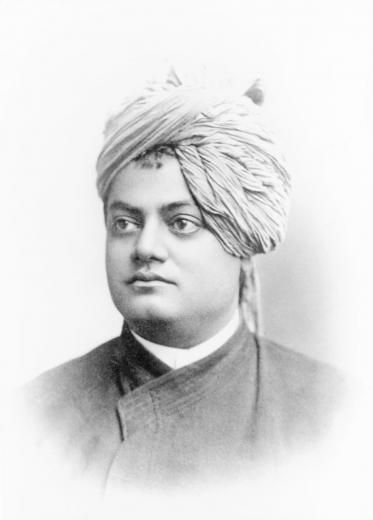
Swami Vivekananda, born as Narendranath Datta on January 12th, 1863 in Kolkata(then Calcutta), grew up in a well-to-do and culturally rich environment. His father Vishwanath Datta was a successful lawyer with a modern outlook, while his mother Bhuvaneshwari Devi, was a devout and deeply spiritual woman. This blend of modern intellectualism and traditional spiritualitywould profoundly influence Narendranath’s development. His father’s liberal views exposed him to progressive ideas about society, law and humanism while his mother’s spirituality nurtured his compassion, devotion and love for Hindu philosophy.
Narendranath was no ordinary child. His sharp intellect, deep sense of curiosity and compassion set him apart from his peers. His mother, a devout woman taught him the values of kindness and truth. While his father, an attorney exposed him to modern ideas and a rational way of thinking. young Narendranath spent hours pondering over the mysteries of life, constantly asking questions like, What is the purpose of Life?” and “Have you seen God?”
>Intellectual and Spiritual Curiosity
Even as a child, Narendranath showed signs of exceptional intelligence and curiosity. From a very early age, he was exposed to the great epics of India- RAMAYANA and MAHABHARATA which ignited his imagination and sense of moral duty. He excelled in academics, particularly in philosophy and logic, which earned him a reputation for brilliance among his peers and teachers. However, despite his success in traditional education, he was not satisfied with intellectual knowledge alone he sought something deeper. His mind was constantly questioning the meaning of life, the existence of God and the reality of the soul.
By his teenage years, Narendranath had already begun exploring different schools of thought, both Eastern and Western. He was deeply influenced by Western philosophers like John Stuart Mill and Herbert Spencer, as well as the teachings of Hindu sages and the Upanishads. His exposure to these diverse sources of knowledge fueled his search for answers to life’s most profound questions, but it also left him spiritually restless.
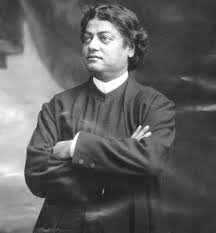
As he grew older, Narendranath continued to excel in his studies. He enrolled at Presidency College in Kolkata(then Culcutta) and later joined the Scottish Church College, where he studied philosophy, literature and science. His intellectual brilliance, combined with a remarkable memory, made him stand out. But even with all academic success, Narendranath’s thirst for spiritual truth persisted.
At college, he delved into the works of Western philosophers, but he was also influenced by the Bhakti movement– a devotional trend within Hinduism that emphasized love and surrender to God. He read deeply into the Upanishads and the Bhagavad Gita, texts that later became central to his own spiritual philosophy.
>Early Spiritual Crisis
By his late teens, Narendranath experienced what could be described as a spiritual crisis. Though he read and studied intensely, none of the books or philosophical discussions could answer his burning questions about the existence of God and the nature of reality. He was filled with a deep sense of emptiness, as intellectual knowledge alone was not enough for him. During this period, Narendranath was drawn to different spiritual figures in an attempt to find answers. Despite visiting various temples and meeting several religious teachers, he remained unsatisfied with their explanations.
This phase of intellectual turmoil and spiritual search culminated when he finally met Ramakrishna Paramahamsa, the saint of Dakshineshvar, who would change the course of his life forever. Ramakrishna’s simple yet profound spirituality and his direct experience of the divine answered the deepest questions that had troubled Narendranath for years.
2. Meeting Ramakrishna Paramahamsa: A Turning Point in Swami Vivekanada’s Life
In 1881, at the age of 18, Narendranath’s quest led him to Ramakrishna Paramahamsa, a saint who resided at the Dakshineshvar Kali Temple, located on the outskirts of Kolkata(then Culcutta). Ramakrishna was known for his simple and ecstatic devotion to the Goddess Kali and his direct experience of divine reality. Despite Ramakrishan’s reputation, Narendranath was initially skeptical, as he had heard conflicting opinions about the saint. Some praised Ramakrishna as a true mystic, while other dismissed him as a madman. Nevertheless, encouraged by one of his professors, Narendranath visited Dakshineshvar to meet this unconventional spiritual figure.
When Narendranath first met Ramakrishna, he immediately asked the question that had haunted him for years: “Sir, have you seen God?” Unlike others, who offered philosophical or scriptural explanations, Ramakrishna answered simply and directly saying: “Yes, I have seen God. I see him as clearly as I see you, only more intensely.” This answer stunned Narendranath. He had never heard anyone speak about God with such conviction and simplicity. For the first time, he encountered someone who claimed to have a direct, living experience of the divine. This meeting marked the beginning of Narendranath’s transformative journey from intellectual seeker to a discipline of Ramakrishna.
>Ramakrishna’s Teachings and Impact on Narendranath
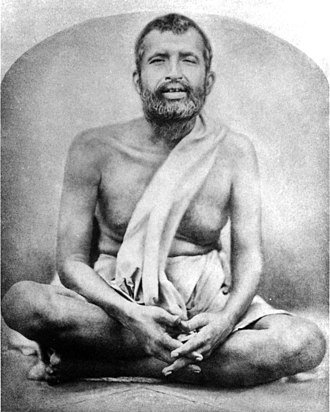
Ramakrishna was not a leader scholar in the conventional sense. He had little formal education and spoke in simple language, but his profound spiritual wisdom transcended intellectual knowledge. He taught through personal experiences, parables and stories using everyday examples to explain the highest spiritual truths.
One of Ramakrishna’s core teachings was the UNITY OF ALL RELIGIONS. He believed that all paths- whether through devotion(Bhakti), knowledge(Jnana) or selfless action(Karma)-lead to the same ultimate truth. Ramakrishna had practiced various religious including Christianity and Islam, and realized that each path leads to the same divine reality. This teaching resonated deeply with Narendranath, who had always questioned the rigid boundaries between religions.
Ramakrishna also emphasized that the goal of human life is to realize God and that the divine resides in every human being. His famous teaching was “Jiva is Shiva” meaning Every individual soul is a manifestation of God. This radical idea of seeing divinity in every person had a profound impact on Narendranath, and it later became a central tenet of swami Vivekananda’s own philosophy.
>Narendranath’s Transformation Under Ramakrishna
Initially, Narendranath struggle to accept some of Ramakrishna’s mystical experiences and teachings. His rational mind often clashed with Ramakrishna’s devotional approach. However, overtime he became deeply influenced by his master’s spiritual power and simplicity. Ramakrishna’s life itself was his message- he lived what he preached, and his love for the divine was evident in every action. Ramakrishna saw the immense potential in Narendranath. He believed that Narendranath was destined for a great spiritual mission, telling him that he would one day become a spiritual leader who would awaken the world. Ramakrishna’s unwavering faith in Narendranath gave him the confidence to embrace his spiritual calling.
One significant moment in their relationship occurred when Ramakrishna went into a deep state of Samadhi(spiritual trance) and placed his foot on Narendranath’s chest. Narendranath immediately felt a surge of spiritual energy and lost all sense of material world. This experience shook him deeply, and he realized that Ramakrishna was not an ordinary teacher but a true mystic with the power to grant direct spiritual experiences.
In one instance, Ramakrishna offered Narendranath the ultimate mystical experience: the vision of the Divine Mother Kali. However, Narendranath refused saying, “I want to remain free from all bondage, even visions of God. I want to serve humanity without attachments.” This selfless desire to serve humanity impressed Ramakrishna, who understood that Narendranath was meant for a higher purpose beyond mere spiritual visions.
>Ramakrishna’s Passing and Narendranath’s Transformation
As Ramakrishna’s health began to decline due to throat cancer, Narendranath took charge caring for him, along with a few other close disciples. During this period, Ramakrishna entrusted Narendranath with the responsibility of carrying forward his spiritual mission. In 1886, just before his death, Ramakrishna transferred his spiritual power to Narendranath, symbolically passing on his mantle of leadership.
After passing of Ramakrishna, Narendranth faced an existential crisis. He was deeply affected by the loss of his Guru and spent several months in deep meditation and contemplation. Eventually, he emerged from this period of mourning with a renewed sense of purpose. He renounced worldly life, took the name “”Swami Vivekananda”” and embraced the life of a wandering monk. His mission was now clear: to spread the spiritual teachings of his master and serve humanity.
>Swami Vivekananda’s Profound and Enduring devotion to Ramakrishna
Throughout his life, Swami Vivekananda regarded Ramakrishna as the embodiment of divine wisdom. He credited all his spiritual knowledge and achievements to his Guru’s grace. Even as he traveled across India and later to the west, Swami Vivekananda always spoke of Ramakrishna’s message of divine unity and the oneness of all religions. He emphasized that Ramakrishna had shown the world that the highest spiritual truth could be realized through any path, as long as one was sincere in their quest.
Swami Vivekananda often said, “If there has been anything achieved by me, by thoughts or words or deeds, if from my lips has ever fallen one word that has helped anyone in the world, I lay no claim to it; it was his(Ramakrishna’s) work, not mine.”
3. Embracing Monkhood and Spiritual Quest: Swami Vivekananda’s Journey of Renunciation
>Renunciation and Becoming Swami Vivekananda
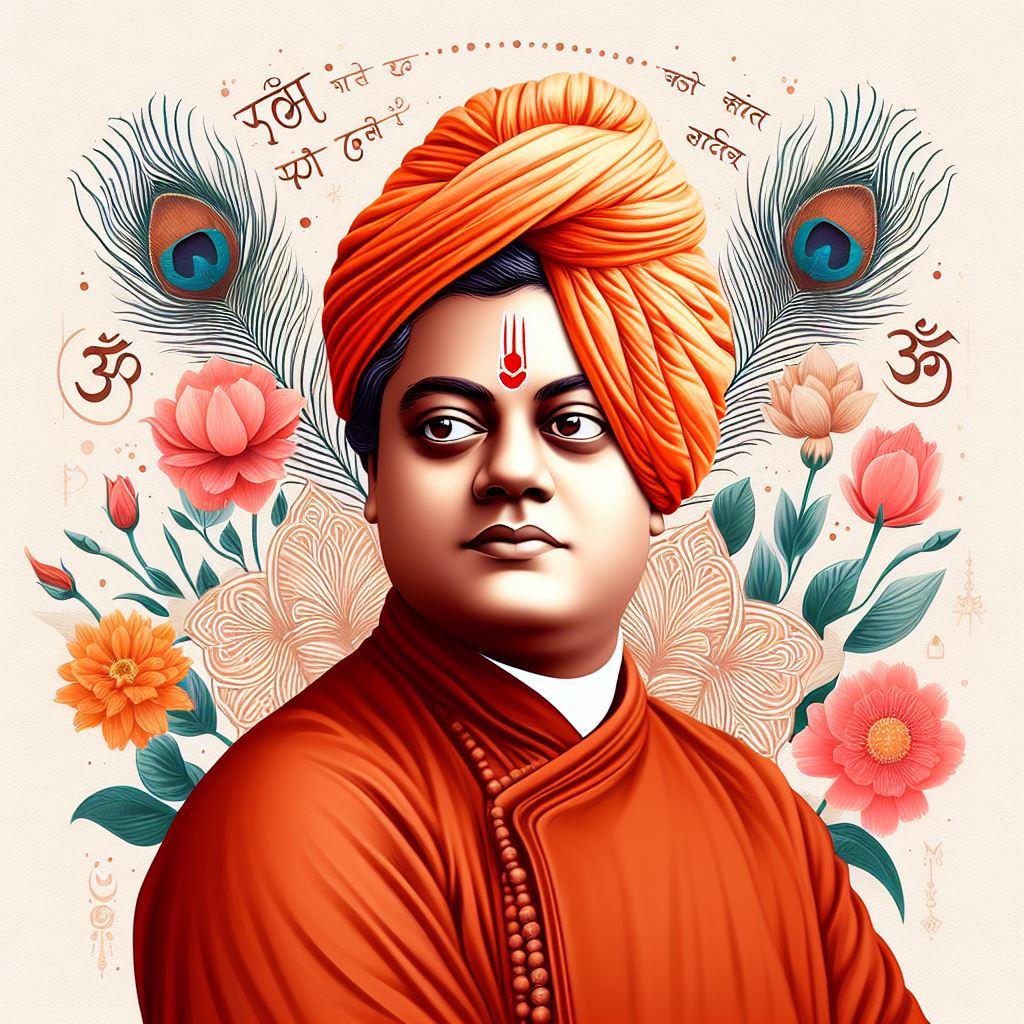
After the passing of Ramakrishna Paramhamsa in 1886, Narendranath Datta , overwhelmed by grief, faced an existential crisis. Losing his spiritual guide left him disoriented, yet it also strengthened his resolve to pursue a life dedicated to spiritual realization. Narendranath decided to renounce worldly attachments and fully embrace the path of SANNYASA(Monkhood), taking the name “Swami Vivekananda.”
Swami Vivekananda’s decision to embrace monkhood was not merely a withdrawal from worldly life but a profound commitment to his spiritual calling and service to humanity. According to the Hindu tradition, a SANNYASI renounces personal attachments, family ties and material possessions dedicating their life to seeking the highest spiritual truth and serving others selflessly.
During this time, Swami Vivekananda and several of Ramakrishna’s disciple took vows of renunciation at a dilapidated house in Baranagar, which became the first Ramakrishna Monastery. Vivekananda in particular felt that his mission extended beyond the walls of the monastery. He believed that Ramakrishna’s teachings had to be shared with the world, and his growing sense of duty towards society urged him to travel across India, He resolved to follow in the footsteps of India’s wandering monks, adopting the life of a Parivrajaka , or a wandering ascetic.
Swami Vivekananda began his journey as a wandering monk in 1888. For the next several years, he traversed the length and breadth of India, often on foot or by train, with nothing but a begging bowl and a staff. His journey covered not only the major pilgrimage sites but also remote villages, forests and deserts. This phase of his life marked a turning point, as he sought to understand not only the spiritual traditions of India but also the condition of its people.
>Learning from India’s Spiritual Diversity
During his travels, Swami Vivekananda met with ascetics, sages and scholars from diverse religious traditions. He engaged in discussion with Buddhist monks, Jain ascetics, Sufi ascetics and Christian missionaries absorbing the wisdom each tradition, His quest for spiritual knowledge was not confined to any one sect or ideology. Rather, he sought to understand the essence of all religions, believing that they all led to the same ultimate truth. one of his most profound realizations during this period was the unity of all faiths. The idea of religious pluralism would later become one of the cornerstones of Swami Vivekananda’s teachings.
>Awakening to India’s Social Problems
While his spiritual journey deepened his understanding of India’s rich religious heritage, it also exposed him to the harsh realities of colonial rule and the widespread poverty of the people. The India that Swami Vivekananda saw in the late 19th century was suffering from extreme social, economic and cultural decline. The country was under British colonial rule, and many of its ancient institutions were in a state of decay.
What disturbed Vivekananda most was the plight of the masses- the poor and marginalized, who lived in conditions of abject poverty. He was appalled by the ignorance, superstition and rigid caste discrimination that plagued Indian society. The neglect of the common people by the upper castes and the failure of the religious leadership to address these issues left a deep impression on him.
Swami Vivekananda recognized that true spirituality could not exist in isolation from social issues. He believed that spirituality without compassion was hollow and that the true purpose of religion was to uplift humanity. His wanderings led him to the conviction that service to humanity is service to God– a teaching he had imbibed from his master Ramkrishna. He also realized that the solution to India’s problems lay in education and empowerment. He believed that the masses needed to be educated and made aware of their potential, both spiritual and material. He saw education as the means to spiritual awakening, economic development and social equality.
>The Pilgrimage to Kanyakumari: The Birth of a Mission
One of the most significant moments in Swami Vivekananda’s journey came when he reached Kanyakumari, the southernmost tip of India in 1892. Here, he meditated on a large rock(later known as the Vivekananda Rock), surrounded by the sea on all sides. It was during this meditation that he had a powerful spiritual vision that clarified his mission in life.
Sitting on the rock, Swami Vivekananda reflected deeply on the state of India and its future. He realized that India’s spiritual heritage was its greatest strength, but that this spiritual knowledge needed to be revitalized and spread throughout the country. He also understood that India’s decline was due to the neglect of the masses and the failure of the country’s religious and intellectual leaders to address the needs of the poor.
This meditation marked the moment when Swami Vivekananda’s personal spiritual quest transformed into a mission for the spiritual and social regeneration of India. He realized that his life’s purpose was to awaken the people of India to their own inner power, to restore their pride in their spiritual traditions, and to lead them toward a life of dignity, self-reliance, and service to humanity.
>Preparation for the World Stage
By the time he completed his wanderings, Swami Vivekananda has become a deeply transformed individual. He had not only attained a high level of spiritual realization but also developed a profound understanding of the social and political challenges facing India. He was now ready to take his message to the world.
In 1893, Swami Vivekananda received an invitation to represent Hinduism at the Parliament of the World’s Religions in Chicago. Though initially uncertain about travelling to the west, he saw this as an opportunity to introduce the spiritual wisdom of India to the wider world. His decision to attend the Parliament marked the beginning of his global mission to spread the message of Vedanta and universal brotherhood.
4. The Parliament of the World’s Religions, 1893: Swami Vivekananda’s Historic Address
>The Decision to Attend
Swami Vivekananda’s journey to the Parliament of the World’s Religions in Chicago, 1893, was a defining moment not only in his life but but also in the global recognition of India’s spiritual wisdom. His decision to attend the parliament was influenced by a combination of factors. On one hand, Vivekananda was eager to present the rich spiritual heritage of India to the west. On the other, he had deep concerns about the state of India and sought a platform from which to communicate the importance of Vedantic teachings to uplift humanity.
Swami Vivekananda initially hesitated , as he had no funds for the journey and was unsure whether he would be welcomed. However, he was encouraged by his disciples and some influential well wishers who believed that his presence at the Parliament would serve a higher purpose.
Swami Vivekananda eventually made the decision to go the United States. Several of his Indian admires and disciples helped raise funds for his voyage. Before leaving, he went to the temple of Kanyakumari and prayed for guidance. This marked the beginning of his mission to spread the universal message of Vedanta to the world.
>Arrival in America: Struggles and Challenges
When Vivekananda arrived in Chicago in July 1893, he faced significant challenges. He was a foreign monk, unfamiliar with Western customs, and lacked the financial support and connections that many of the other delegates had. Moreover, the Parliament of the World’s Religions was not scheduled to begin until September, and Vivekananda had to find a way to survive in an unfamiliar country for several months.
Despite these difficulties, Vivekananda remained determined. He lived on very little and relied on the hospitality of strangers, staying in small hostels and sometimes even in parks. It was through the kindness of Professor John Henry Wright, a professor at Harvard University, that Vivekananda gained entry to the Parliament. After meeting Vivekananda and recognizing his intellectual and spiritual brilliance, Wright told him, “To ask you, Swami, for your credentials is like asking the sun to state its right to shine.”
Wright wrote to the Parliament organizers, advocating for Vivekananda’s participation. He saw in Vivekananda not just a representative of Hinduism but a global spiritual leader whose message transcended all religious boundaries. With Wright’s help, Swami Vivekananda was finally invited to address the Parliament.
>The Famous Opening Speech
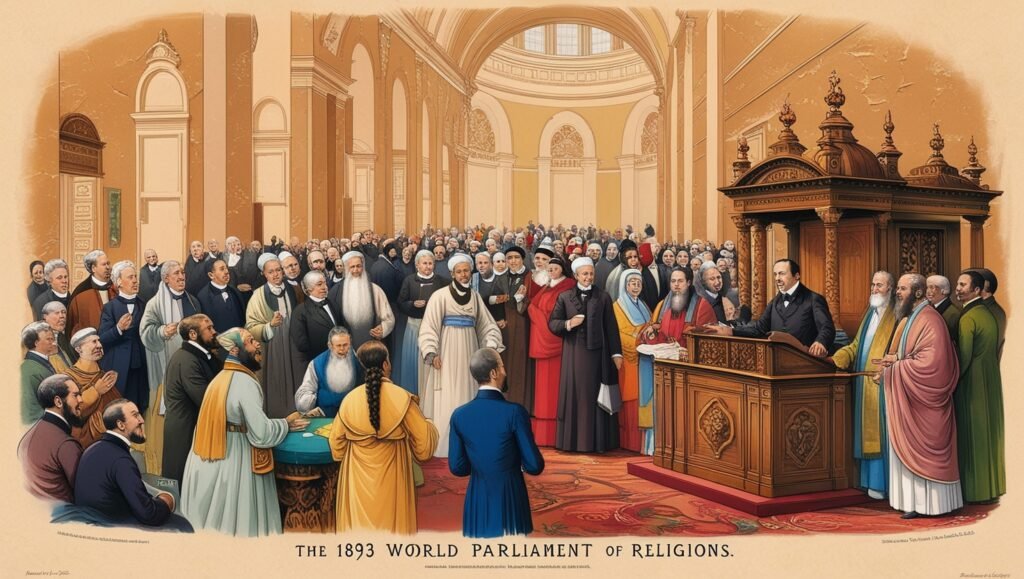
The Parliament of the World’s Religions officially opened on September 11th, 1893. The event was attended by religious leaders from various faiths, including Christianity, Judaism, Islam, Buddhism and others. It was the first time in history that representatives from all major world religions had come together on a single platform to promote dialogue and mutual understanding.
Swami Vivekananda’s opening speech at the Parliament is one of the most iconic moments in the history of interfaith dialogue. When he rose to speak, he began with the now-famous words: “Sisters and Brothers of America.” These simple yet heartfelt words had an immediate and profound effect on the audience. The crowd of thousands rose to their feet in a standing ovation that lasted for several minutes. Vivekananda’s words resonated deeply with American audience, not only because of the warmth and sincerity with which he spoke but also because of the universal message he carried.
In this brief but powerful address, Swami Vivekananda introduced the Parliament to the ancient spiritual wisdom of Vedanta and the universal truths that transcend all religions. One of the key messages of his speech was the idea that all religions are different paths to the same ultimate truth– a central tenet of Ramakrishna’s teachings.
>Impact on the West
Swami Vivekananda’s speeches at the Parliament of the World’s Religions had and immediate and far-reaching impact. The newspapers hailed him as a great spiritual ambassador from the East. The New York Herald wrote, “Vivekananda is undoubtedly the greatest figure in the Parliament of Religions. After hearing him, we feel how foolish it is to send missionaries to this learned nation.” His unique combination of spiritual depth, intellectual brilliance, and personal humility won him admires from all walks of life.
Following the Parliament, Swami Vivekananda spent several years in the United States and Europe, lecturing Vedanta and Indian Spirituality. He established Vedanta societies in cities like New York and London, helping to introduce the Western world to the teachings of Hindu philosophy and Yoga. His impact on Western thought was profound, influencing not only the field of religious studies but also the emerging mind-body movement and the growing interested in Eastern spirituality
In the next part we will be discussing the core teachings and quotes of Swami Vivekananda…
*Disclaimer:
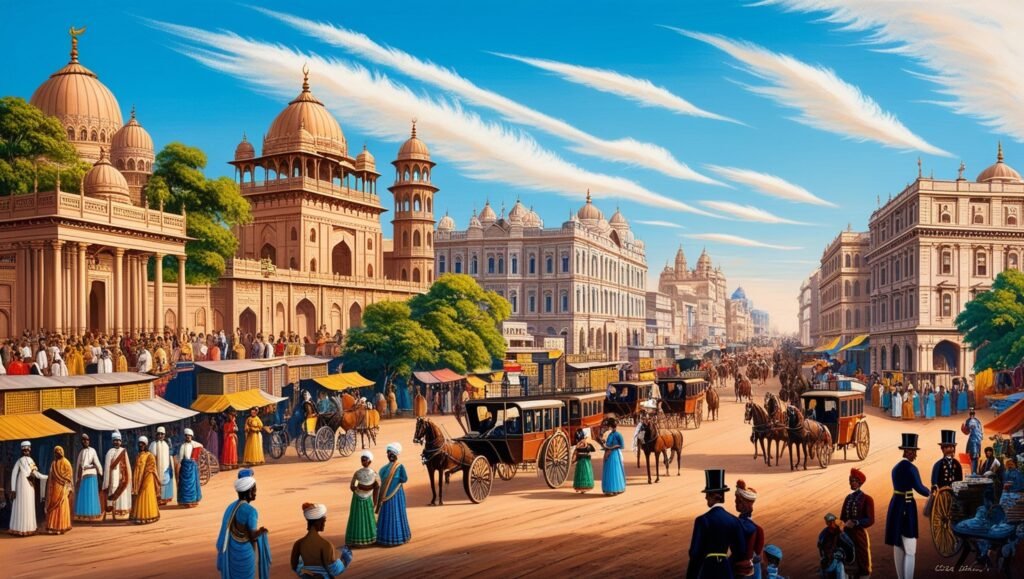
Our website uses some AI-generated images to enhance the visual experience and illustrate content effectively. These images are created through artificial intelligence and may not always reflect real-life objects, people, or places. We aim to use AI images for artistic and educational purposes only. Please note that while we strive to ensure accuracy, some representations may vary or be symbolic in nature. The AI-generated images do not imply endorsements or affiliations with specific individuals or entities unless explicitly stated. For inquiries regarding image usage, or if you believe any content needs review, please feel free to contact us.
Good knowledge shared sir….it is inspiring the youth….
Thanks for your appreciation…👍🏻
Nice 👍 keep it up