

Introduction:
The Life of SIDDHARTHA GAUTAMA, known as the BUDDHA, is a timeless journey that has inspired millions. From his birth as a prince to his quest for enlightenment, the Buddha’s story is a powerful narrative of self-discovery, spiritual awakening and compassion. This blog explore his life, his teaching and the core principles of Buddhism that continue to resonate across the world.
Early Life of Siddhartha Gautama:
Siddhartha Gautama was born around 563 BCE in Lumbini, Nepal into a royal family. King Suddhodhana ensured that he shielded Siddhartha from the harsh realities of life, surronding him with a luxurious lifestyle and comfort. Queen Maya, known for her grace and virtue, embodied elegance in all aspects of her life. According to legend, prior to Siddhartha’s birth, Queen Maya had a dream in which a white elephant entered her womb. This in turn symbolized that her child would indeed be extraordinary.
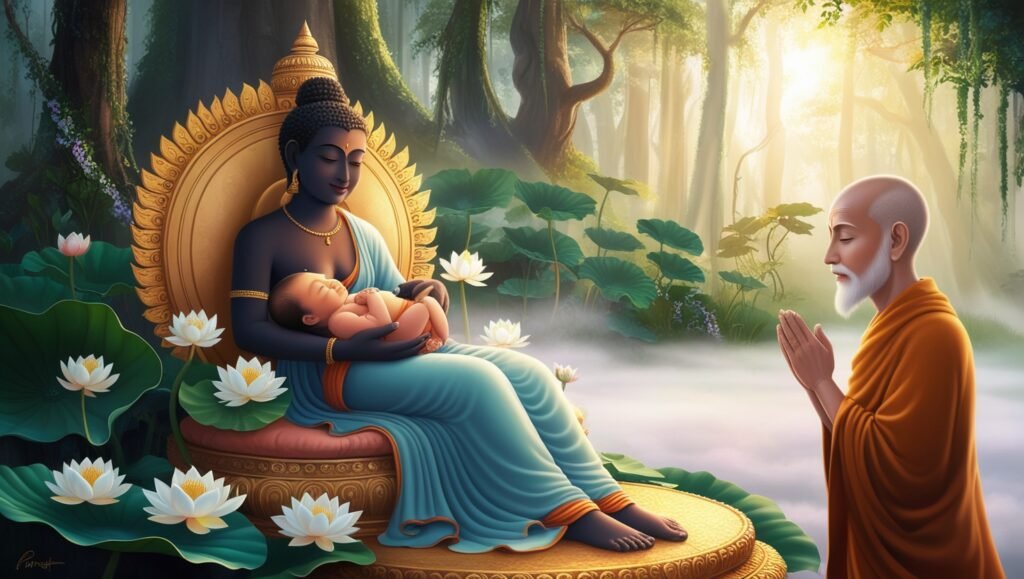
Shortly after Siddhattha’s birth, an astrologer named Asita predicted that Siddhartha would either become a great king or a alternatively, a revered spiritual leader. Concerned by this prophecy, King Suddhodhana decided to shield his son from any exposure to the harsh realities of life, hoping Siddhartha would embrace his royal duties and become a powerful ruler.
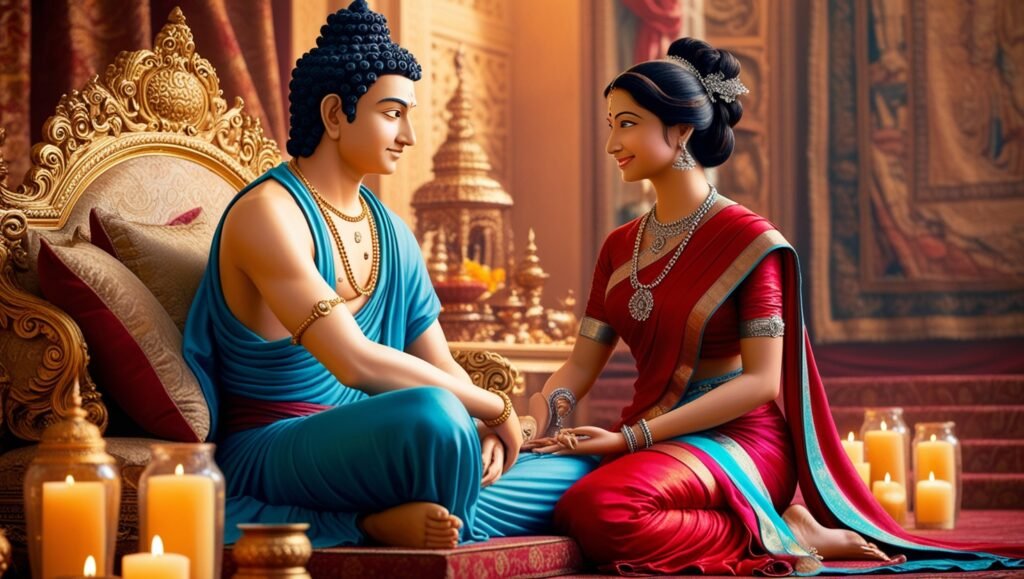
Despite all efforts, Siddhartha was a reflective and curious child. He excelled in all the arts and sciences, showing exceptional intelligence and skill. He married the beautiful Yashodhara at the age of 16, and they had a son named Rahul. Yet, even amidst this idyllic life, Siddhartha felt a sense of unease and dissatisfaction.
The Four Sights(The First Glimpse of Reality):
In his late twenties, during a outside visit of the Palace with friend(name) Siddhartha’s life took a turning point and he encountered what would later be known as the “Four Sights”: (1) An old Man; (2) A Sick Man; (3) A Dead Body & (4) A Wandering Ascetic.
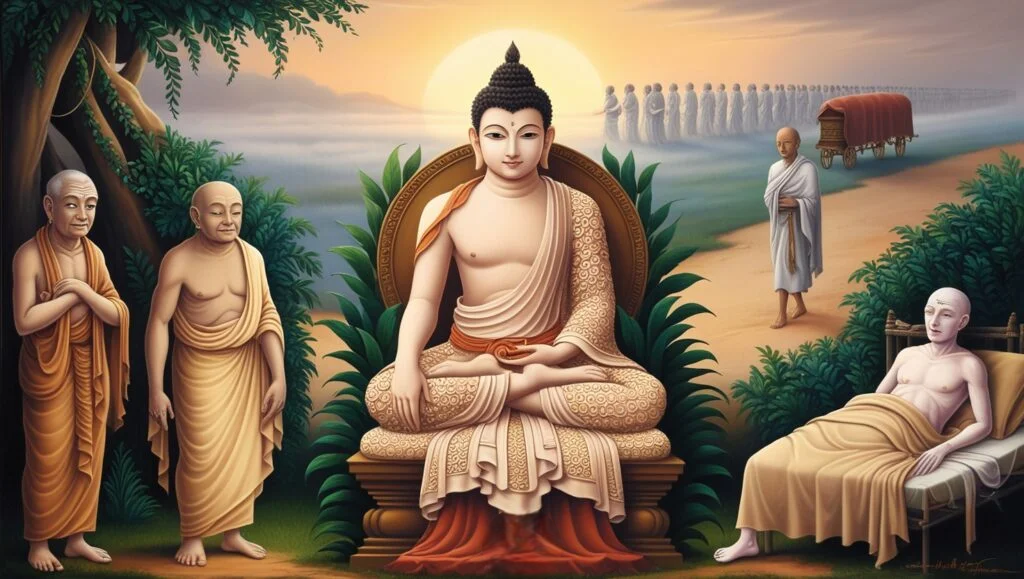
- An Old Man : Siddhartha saw an elderly man, leaning on a stick. For the first time, he realized that aging was an inevitable part of life.
- A Sick Man : Next, he saw a man suffering from disease. This sight exposed him to the pain and suffering caused by illness.
- A Dead Body : Siddhartha then saw a corpse being carried to a funeral pyre, confronting him with the reality of death and the impermanence of the life.
- A Wandering Ascetic : Finally, he saw a wandering ascetic who had renounce the world in search of in search of spiritual truth. This sight inspired him with the possibility of a life dedicated to understanding and transcending suffering.
These encounters shook Siddhartha to his core. He realized that no amount of wealth or power could shield him or his loved ones from the inevitable suffering that life brings.
The Great Renunciation
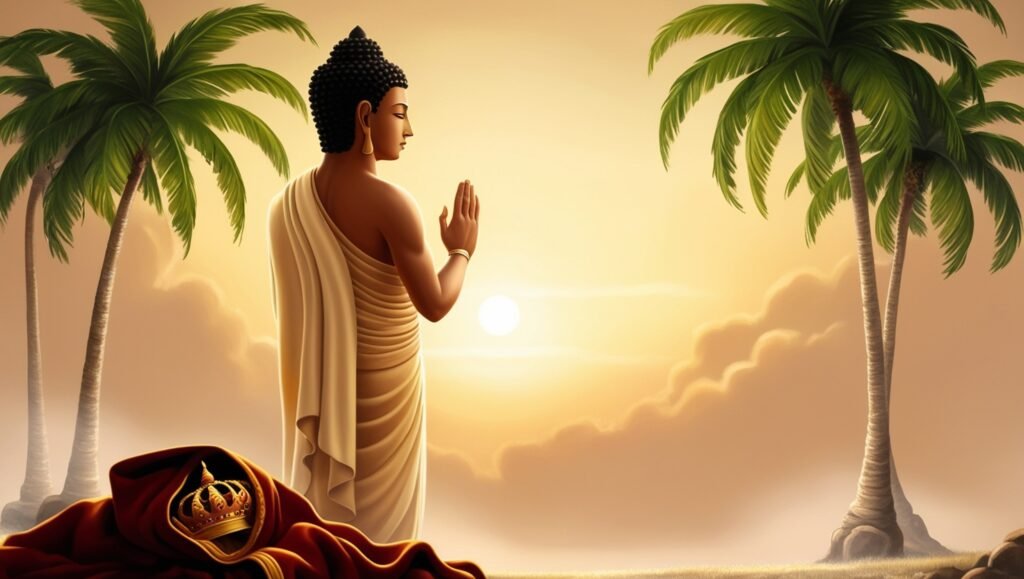
Siddharth’s mind was now consumed with questions about the nature of life, suffering and the path to liberation. He understood that his luxurious lifestyle could not provide the answers he sought. One night, after seeing his wife and son peacefully asleep, he made a momentous decision. At the age of 29, Siddhartha left the palace, his family, and all worldly possessions behind.
He donned the simple robes of an ascetic and embarked on a journey to find the truth This event known as the “GREAT RENUNCIATION” marked the beginning of Siddhartha’s quest for enlightenment. He would spend the next six years practicing extreme austerities, meditation and seeking guidance from various spiritual teachers.
The Middle Way: From Extreme Austerity to Inner Balance
The Middle way, is a core concept in Buddhism representing a balanced approach to spiritual practice and life. It was formulated by Siddhartha Gautama after he realised that both indulgence and extreme asceticism were barriers to achieving enlightenment.
After renouncing his princely life, Siddhartha dedicated himself to finding the path to liberation from suffering. He joined a group of ascetic and began practising severe self-discipline. He abstained from foods, subjected himself to extreme physical hardships, and meditated for long hours. His goal was to conquer bodily desires and transcend the material world through sheer willpower.
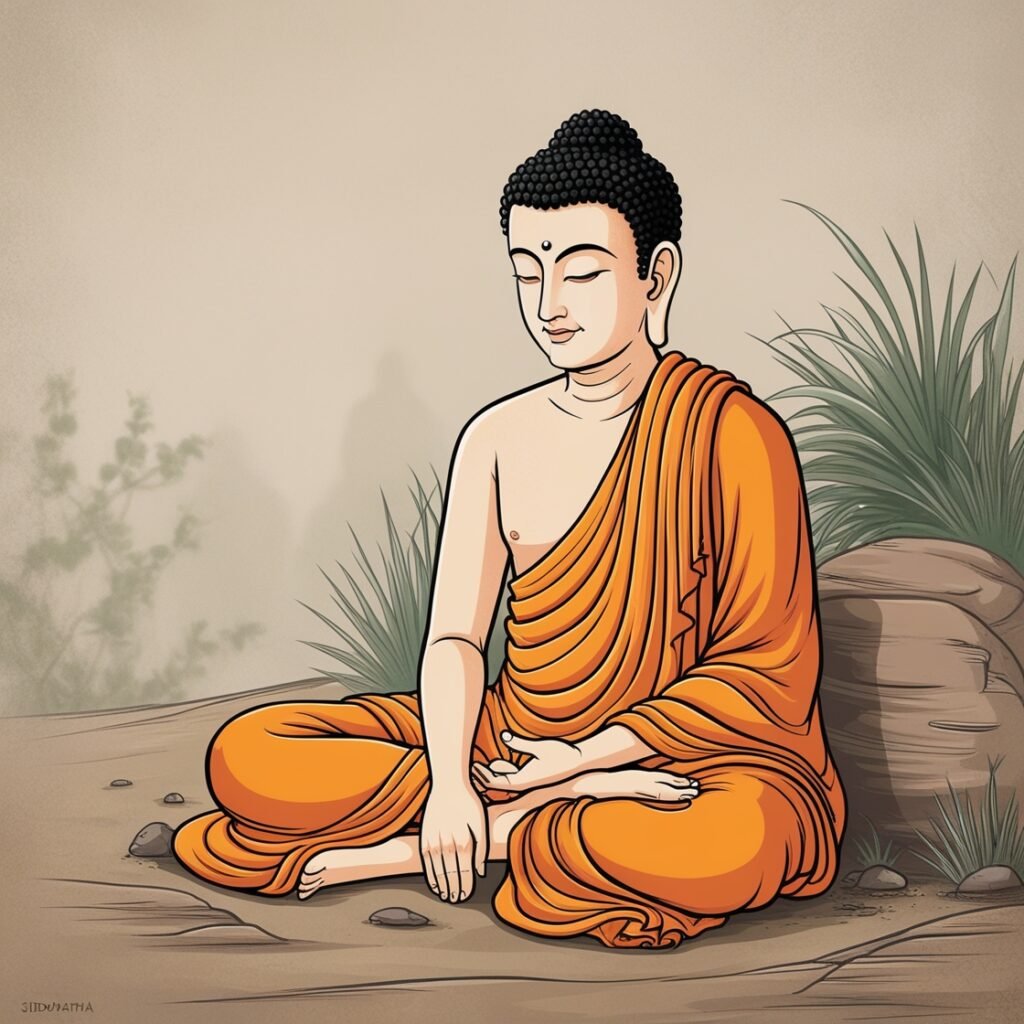
For six years, Siddhartha pursued this path pushing his body to its limits. He became emaciated, surviving on minimal foods- sometimes just a few grains of rice or a handful of nuts. He believed that by denying his physical needs, he could reach a state of spiritual purity.
However despite his intense efforts, Siddhartha did not find the answers he sought. Instead, he realized that his extreme asceticism was only weakening his body and mind, preventing him from achieving true clarity and insight.
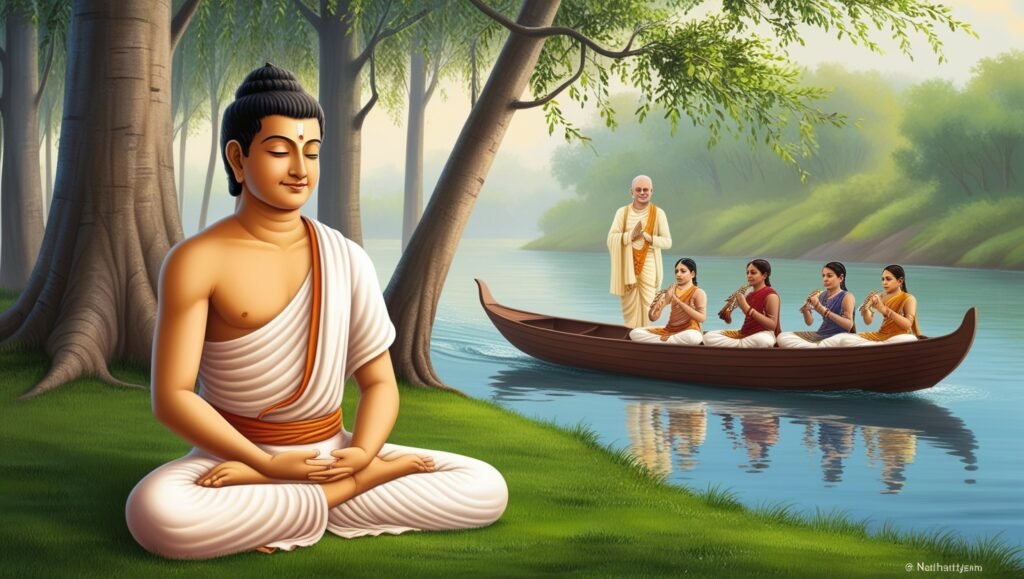
One day while meditating on the banks of the Niranjana River, Siddhartha heard a music teacher on a passing boat explaining to a student , “If you tighten the strings too much, it will break; if you leave it too slack, it will not play.” This simple analogy struck Siddhartha deeply. He understood that neither extreme indulgence in worldly pleasures nor extreme self-mortification would lead to enlightenment.
He realised that true wisdom lies in balance -a middle path that avoids both sensual indulgence and self-denial. This insight became the foundation of what he called The MIDDLE WAY(Majjhima Patipada).
Enlightenment under the Bodhi Tree: The Birth of the Buddha
The moment of enlightenment under the Bodhi Tree is the most signifiant event in the life of Siddhartha Gautama, marking his transformation into the Buddha or the “enlightened one”. It is at this point that siddhartha achieved deep insight into the nature of existence, suffering and liberation thus founding the path that would come to be known as Buddhism.
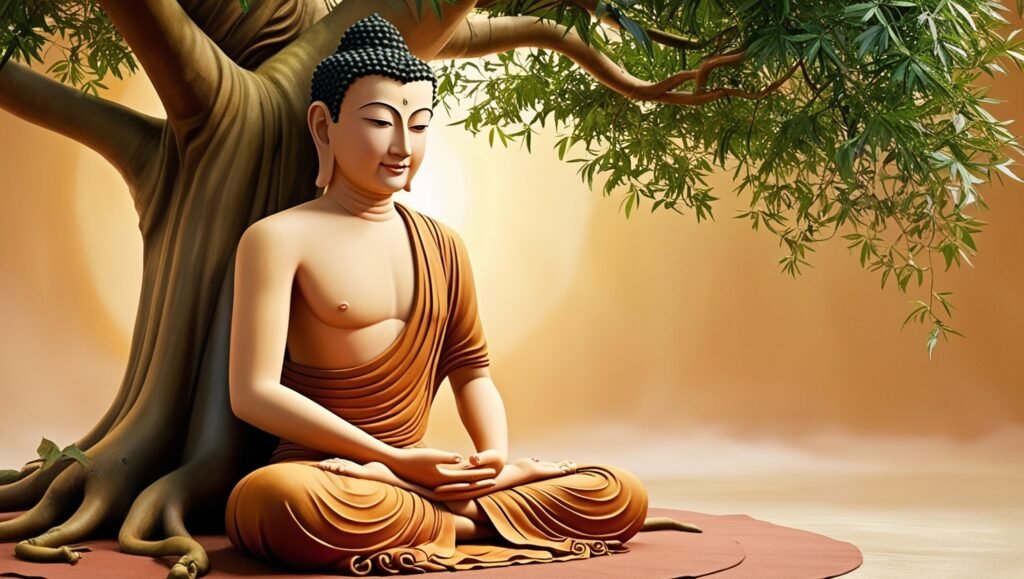
After practising severe asceticism for six years, Siddhartha realised that extreme self-denial was not the path to truth. This realisation led him to adopt the Middle Way– a path of moderation, avoiding the extremes of both indulgence and mortification.
Determined to find the answers to life’s deepest questions- Why do we suffer? How can suffering be overcome? – Siddhartha resolved to sit in meditation until he achieved enlightenment. He journeyed to Bodh Gaya(in present day Bihar(India) and seated himself beneath a large fig tree, later known as the Bodhi Tree.
The Night of Enlightenment
On the night of his enlightenment, Siddhartha entered a deep state of meditation. His mind passed through various stages of heightened awareness and concentration. This night is often described as having three key stages, or “watches” where Siddhartha’s understanding deepened progressively.
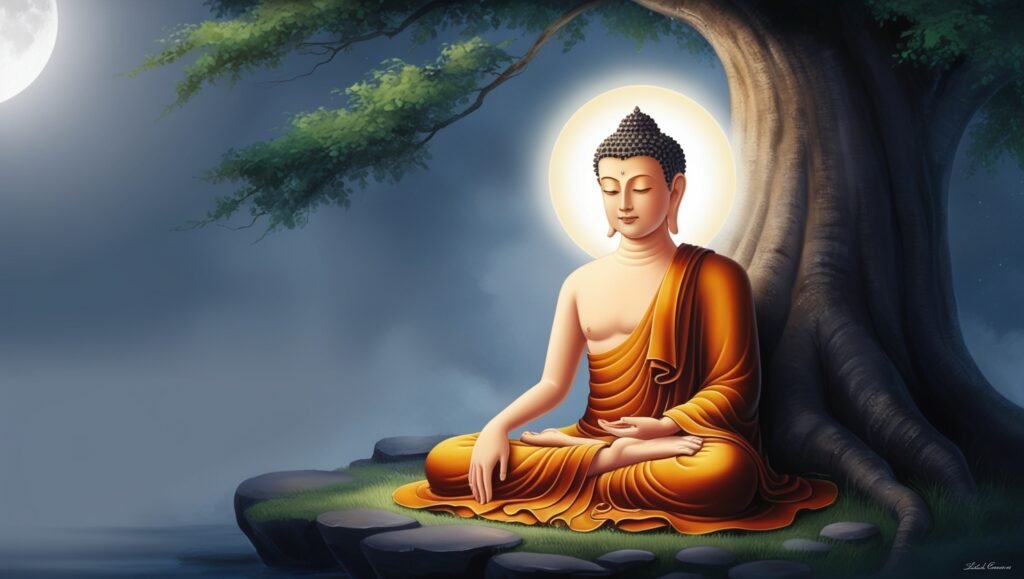
- First watch:- Knowledge of Past Lives
- Second Watch:- Understanding of Karma and Rebirth
- Third Watch:- Realization of the four noble truths
In this final stage, Siddhartha also attained the ultimate understanding of Nirvana, the cessation of suffering and the end of the cycle of rebirth. Nirvana represents a state of absolute peace, liberation and enlightenment, free from desires and the illusions of the self.
with the realization, Siddhartha Gautama became BUDDHA, having achieved complete and perfect enlightenment (Sammàsambodḥi).
To be continued…
*Disclaimer:
Our website uses some AI-generated images to enhance the visual experience and illustrate content effectively. These images are created through artificial intelligence and may not always reflect real-life objects, people, or places. We aim to use AI images for artistic and educational purposes only. Please note that while we strive to ensure accuracy, some representations may vary or be symbolic in nature. The AI-generated images do not imply endorsements or affiliations with specific individuals or entities unless explicitly stated. For inquiries regarding image usage, or if you believe any content needs review, please feel free to contact us.