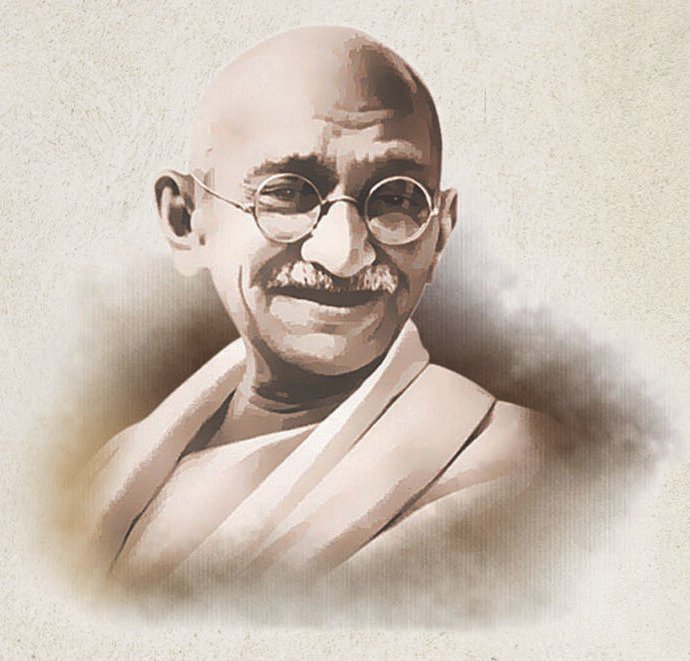
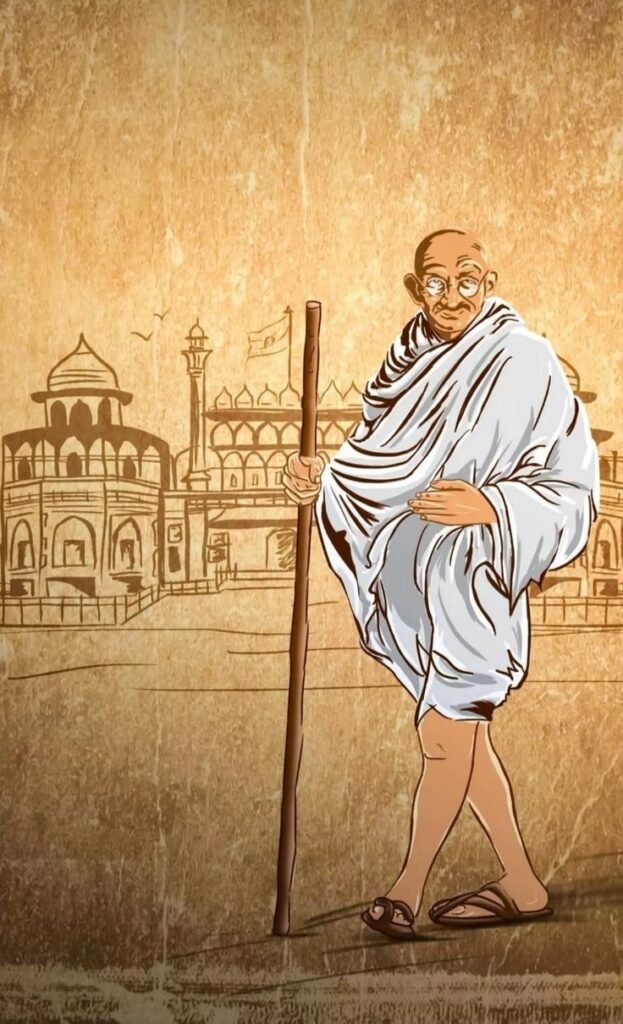
1. Early Life and Education of Mahatma Gandhi
Mohandas Karamchand Gandhi, later known as Mahatma Gandhi was born on October 2nd, 1869 in Porbandar, a coastal town in present-day Gujarat, India. His birth coincided with the socio-political turmoil in British-occupied India, setting the stage for his eventual role as a freedom fighter. He was born into a devout Hindu family of the Modh Baniya caste. His father, Karamchand Gandhi was the dewan of Porbandar, and his mother Putalibai was known for her deep religiosity, fasting and dedication to spirituality. Her influence shaped Gandhi’s early perceptions of morality, spirituality, and the virtues of self-discipline.
While growing up, Gandhiji was exposed to a blend of Hindu, Jain, and Vaishnav traditions. Jainism in particular influenced his concepts of non-violence and vegetarianism as Jain teachings emphasizes non-harming and respect for all the forms. Gandhiji’s mother was a central influence in his life, setting an example through her adherence to religious practices, self-discipline, and compassion for others. Her devotion left a lasting impact on Gandhiji’s moral and ethical development, inspiring his later commitment to principles like Ahimsa(Non-Violence) and Satya(Truth).
>Youth and Education in India
Gandhiji was a shy and introverted child, not particularly distinguished academically. However, he exhibited a strong sense of duty and respect for his parents. He struggled with self-doubt, insecurities, and a fear of the dark, traits he later overcome through self-discipline. Gandhiji attended primary school in Porbandar and then moved to Rajkot(Gujarat), where his family settled. Despite his quiet demeanor and average academic performance, he displayed an inclination toward honesty and ethical behavior from a young age, shaping his personal development.
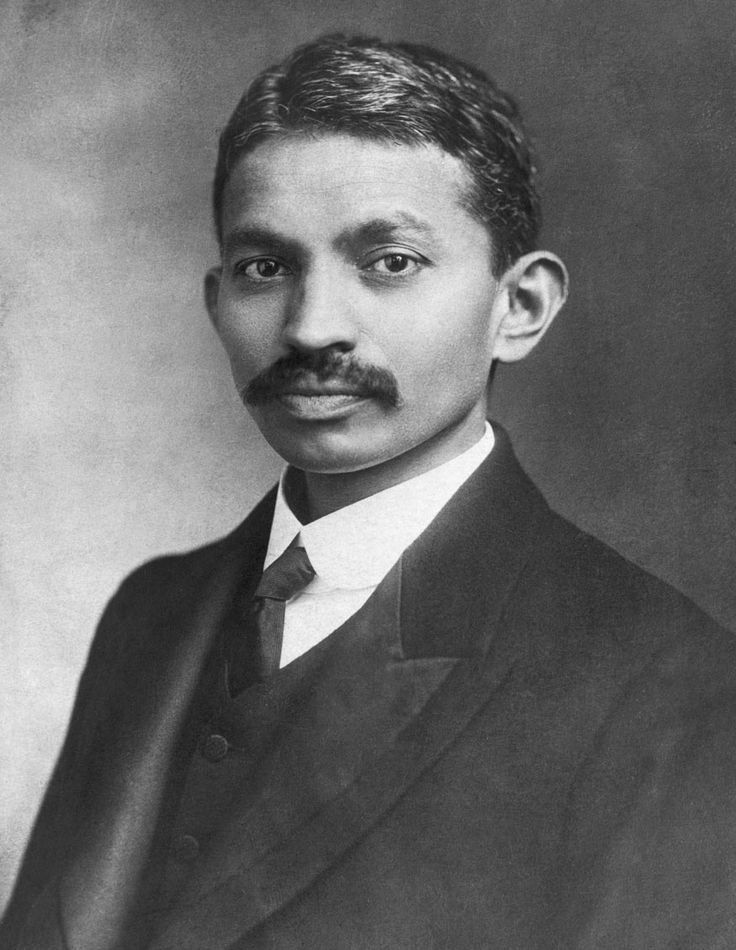
>Marriage at an Early Age
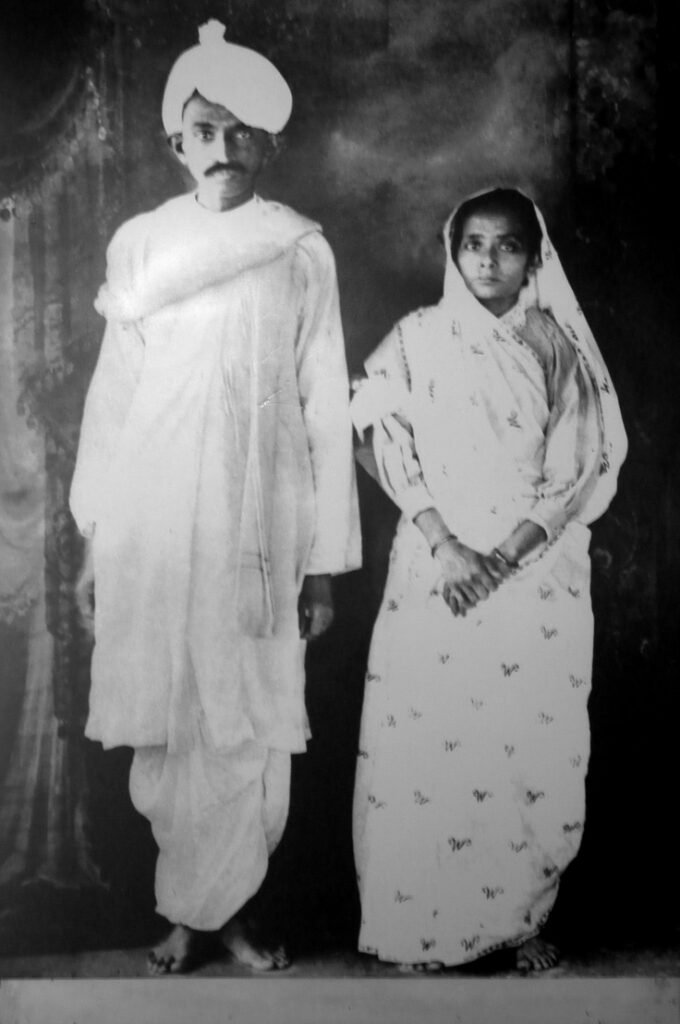
A the age of 13, Gandhiji married Kasturba Makhanji in a marriage arranged by their families. This early marriage was customary in 19th century India, and the relationship became a critical part of his life and development. Kasturba bacame Gandhiji’s lifelong companion and a moral influence on him. Despite their initial struggles, her resilience and support during Gandhiji’s activism shaped his perspective on women’s role in society and reinforced his dedication to family values.
>Journey to England for Higher Studies / Struggle with Cultural Identity and Diet
After his father’s death, Gandhi decided to pursue higher education to support his family and improve their social standing. In 1888, at the age of 18, he sailed to London to study law at Inner temple, one of the four Inns of court in London, becoming one of the few Indians to do so at the time. The move to England exposed him to Western culture, ideals, and education. Although he initially struggled to adapt, Gandhi adopted a few English customs in clothing and manners, reflecting his eagerness to fit in. However, he soon realized the importance of preserving his own culture identity, adopting a more balanced approach to Western ideas.
- Religious and Spiritual Exploration: In London, Gandhiji was introduced to various religious and philosophical texts, including the Bible and the Bhagavad Gita. The Gita in particular, had a profound impact on him, shaping his understanding of duty, selflessness, and spirituality. His studies and reflections during this period laid the foundation for his moral and spiritual beliefs.
- Influence of Western Thinkers and Philosophies: Gandhi became acquainted with the works of philosophers and thinkers such as Henry David Thoreau, John Ruskin, and Leo Tolstoy. Thoreau’s ideas on Civil disobedience, Ruskin’s emphasis on simple living, and Tolstoy’s Christian non-violence deeply resonated with him. These thinkers would later shape his approach to social justice, ethical living, and peaceful resistance.
During this period, Gandhi began to reflect on the concept of Satya, or truth, which would become central to his philosophy. He saw truth as a guiding force in one’s life, and ideal to be upheld through personal integrity and moral courage. This belief would underpin his later advocacy for Satyagraha.
>Return to India as a Qualified Barrister
After three years, Gandhiji returned to India in 1891 as a a qualified barrister, hoping to establish a successful legal career. However, he struggled initially, lacking confidence in public speaking and facing challenges in the rigid legal environment. Despite his formal education, Gandhiji found himself disconnected from the elitism and superficiality of colonial society. This disillusionment with British law and social hierarchy sparked an early questioning of colonial authority and led him to search for more meaningful ways to serve society.
2. Formative Years in South Africa(1893-1914)
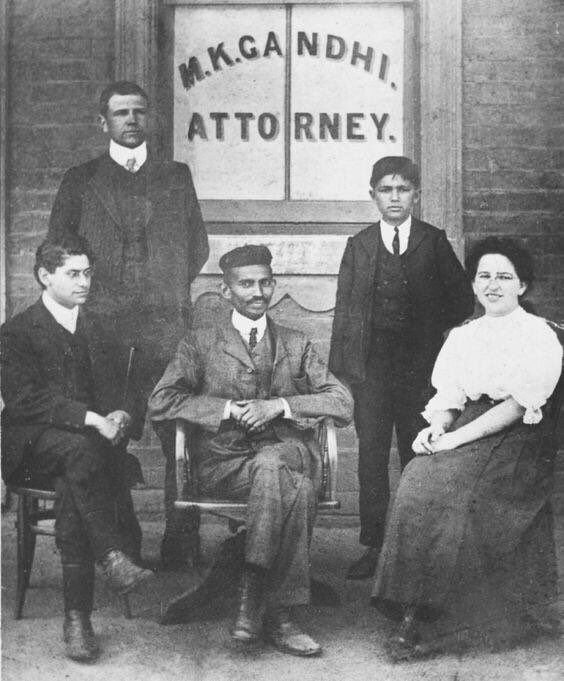
When Mahatma Gandhi traveled to South Africa in 1893, he was a young barrister with minimal experience. His years in South Africa transformed him from a timid lawyer into a fearless leader and reformer. During this period, he developed the foundational principles of non-violent resistance, civil rights activism, and political strategy that he would later bring to India.
>Experiencing Racial Discrimination
Gandhiji arrived in South Africa to work as a legal advisor for Dada Abdulla, a wealthy Indian merchant in Natal. Almost immediately, he encountered racial discrimination. South Africa, then under British Rule, maintained right racial hierarchies that subordinated non-white communities. On his way to Pretoria, Gandhiji was forcibly removed from a first-class train compartment despite having a valid ticket, simply because he was not white. This humiliating experience, at Pietermaritzburg station, was a turning point in his life. He later describe this event as awakening him to the plight of oppressed people worldwide.
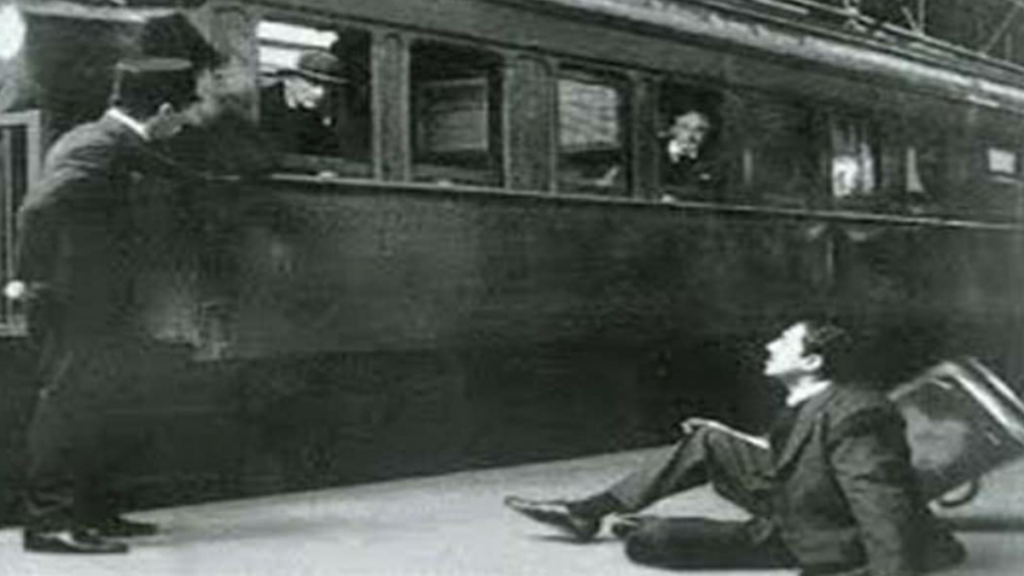
This incident was not an isolated case. Gandhi faced similar discrimination in hotels, on the streets, and even in court, where he was asked to remove his turban. This experience deepened his empathy for the injustice faced by the Indian community in South Africa and ignited his determination to fight against such oppression.
>Fight for Civil Rights
Gandhi initially planned to stay for a year but quickly realized the need for long-term commitment. He extended his stay to advocate for Indian rights, beginning by organizing the Indian community in Natal and raising awareness about their struggles. Those time in South Africa had implemented various discriminatory laws against Indians and other people of color, including restrictions on travel, forced registration, and denial of voting rights. One such law was the “Asiatic Registration Act,” which required all Asians to carry identity passes.
Gandhi started challenging this unjust laws in the courts and through public campaigns. He argued not only for the legal rights of Indians but also for their right to dignity and equality, establishing himself as a prominent leader in the Indian community in South Africa.
Development of Satyagraha(Truth and Non-Violent Resistance)
- Birth of Satyagraha: In response to the injustices, Gandhi developed the principle of Satyagraha. Meaning “holding firmly to truth,” Satyagraha became a new form of non-violent resistance that Gandhi first applied in South Africa. Unlike passive resistance, Satyagraha aimed to win over the oppressor through the power of truth and moral courage, rather than force.
- Core Tenets of Satyagraha: Satyagraha was built on the principles of Ahimsa(Non-Violence), Satya(Truth) and Self-sacrifice. Gandhi believed that non-violence was an active force that could counter oppression, and he argued that a Satyagrahi(one who practice Satyagraha) must willingly endure suffering without retaliation.
Key Campaigns and Movements in South Africa
1.The Fight against the Pass Laws:
• Pass Laws: One of the most oppressive laws in South Africa required Indians to carry identification passes at all times. • Civil Disobedience Campaign: Gandhi led a massive civil disobedience movement in which thousands of Indians, including himself, refused to carry passes. This resulted in widespread arrests, and Gandhi himself was repeatedly imprisoned. • Outcome: Although the struggle against the pass laws was long and difficult, the sustained resistance eventually brought attention to the injustice and weakened the authority of the law.
2. The Transvaal Registration Act(Black Act)
• The “Black Act”: In 1906, the Transvaal government introduced a law requiring Indians to register and carry a certificate of identification at all times, targeting the Indian community.
• First Large-Scale Satyagraha: Gandhi launched a Satyagraha campaign, calling on Indians to burn their registration certificates in protest. Thousands joined him in publicly burning their passes, sparking a movement that would continue for eight years.
• Impact: The campaign gained international attention, pressuring the British authorities and South African government to reconsider their treatment of Indian immigrants.
3. The 1913 Miner’s Strike and Campaign Against the Marriage Law
• The Indian Miners’ Strike: Gandhi organized a strike among Indian miners who worked under exploitative conditions. Thousands of Indian miners, including women and children, marched in protest of their harsh treatment.
• Marriage Law Protest: Another issue was the Marriage Law, which did not recognize Hindu or Muslim marriages, thereby making wives and children of Indian men “illegitimate” in the eyes of the law. Gandhi’s campaign demanded the legal recognition of these marriages.
• Mass Imprisonment and Solidarity: The strike saw many Indians, including Gandhi, imprisoned. But this sacrifice and the mass solidarity among the Indian community eventually forced the South African government to negotiate.
Founding of the Natal Indian Congress
• Creating a Platform for Collective Resistance: In 1894, Gandhi founded the Natal Indian Congress (NIC) to organize Indians in South Africa and give them a united voice. Through the NIC, he mobilized Indian merchants, laborers, and other community members to form a strong base for collective action.
• Awakening Community Spirit: The NIC held public meetings, published petitions, and sent representatives to Britain to lobby for Indian rights, building solidarity within the Indian community.
• Promoting Equality and Justice: Gandhi insisted that the NIC work not just for Indians but for the broader cause of justice for all oppressed people in South Africa, highlighting his commitment to universal equality.
Transformation of Gandhi’s Character and Philosophy
Gandhi’s experienced in South Africa transformed him from a young lawyer into a determined leader who fought against injustice on moral grounds. His advocacy of civil rights went beyond legal arguments to a more profound moral stance based on compassion and humanity.
During this period, Gandhi adopted a simpler lifestyle. He gave up Western clothing, started practicing self-discipline, fasting, and celibacy, and embraced vegetarianism more rigorously. These practices became essential to his philosophy and strengthened his resolve as a leader. In South Africa, Gandhi’s ideas evolved to see non-violence not only as a personal ethical choice but as a powerful strategy for mass political action. He came to believe that the practice of non-violence could be used to challenge any form of injustice globally.
Legacy of Gandhi’s South African Years
• Impact on South African Society: Gandhi’s work in South Africa forced the colonial administration to recognize the strength of organized, non-violent protest, laying the groundwork for future resistance movements.
• Blueprint for the Indian Freedom Struggle: Gandhi’s development of Satyagraha and non-violent resistance in South Africa served as a “rehearsal” for the Indian independence struggle. His leadership in South Africa established his reputation as a committed advocate of justice, drawing the attention of Indian leaders.
• Influence on Global Civil Rights: Gandhi’s philosophy inspired future civil rights leaders such as Martin Luther King Jr., Nelson Mandela, and Cesar Chavez. His approach to fighting oppression through moral courage, compassion, and non-violent means remains a powerful model for social and political movements worldwide.
3. The Principles of Mahatma Gandhi: TRUTH, NON-VIOLENCE and SATYAGRAH
The guiding principles of Mahatma Gandhi’s life and activism were grounded in his beliefs in Truth(Satya), Non-Violence(Ahimsa) and Satyagraha. These principles became the cornerstone of his philosophy and approach to social change. Gandhiji viewed these values not just as abstract ideals but as practical tools for transforming society and empowering the oppressed. Here’s an in-depth look at each of these core principles:
TRUTH(Satya)
• Truth as the Ultimate Goal: Gandhi believed that truth was the ultimate reality and that everyone should strive to live by it in all aspects of life. For him, truth was synonymous with God, and his pursuit of truth became his life’s mission. He often said, “Truth is God,” suggesting that seeking truth was a form of worship and moral growth.
• Personal and Social Responsibility: Gandhi extended the idea of truth beyond personal honesty. He argued that adhering to truth required individuals to live in harmony with others, to recognize social injustice, and to work actively to correct it. This concept of truth emphasized ethical responsibility, transparency, and integrity.
• Truth in Political Activism: Gandhi saw truth as a foundation for political activism. In his view, any movement that sought justice and fairness must be rooted in truth. As a result, he encouraged his followers to be transparent in their actions, believing that truth would give them the moral authority to challenge injustice.
• Self-Reflection and Humility: Gandhi acknowledged that truth was difficult to fully understand and that one’s perception of it might change over time. This humility led him to continually question himself and adjust his views when he found better insights. He viewed the pursuit of truth as a continuous journey that required self-discipline and open-mindedness.
Non-Violence(Ahimsa)
• Ahimsa as a Way of Life: Ahimsa, or non-violence, was one of the foundational aspects of Gandhi’s philosophy. Inspired by Hinduism, Jainism, and other religious teachings, Gandhi adopted non-violence as both a personal virtue and a political strategy. He believed that non-violence was the truest form of strength, enabling individuals to face injustice without hatred.
• Non-Violence Beyond Physical Harm: For Gandhi, non-violence wasn’t just the absence of physical violence; it extended to thoughts, words, and actions. He believed that true non-violence required individuals to eliminate anger, hatred, and prejudice from their minds. This “purification” of thought made the practice of Ahimsa more than a strategy; it was a commitment to love and respect for all living beings.
• Sacrifice and Self-Control: Gandhi’s approach to non-violence required immense self-discipline. He saw the willingness to endure suffering without retaliation as a demonstration of moral strength. His philosophy suggested that facing oppression without yielding to anger was more powerful than fighting back violently.
• Non-Violence in Mass Movements: Gandhi applied the principle of non-violence to the political arena, making it the basis of large-scale resistance movements. He believed that non-violent movements were more likely to win public support and moral authority, compelling even the oppressors to reconsider their actions. Non-violence thus became a powerful force that could unite diverse groups in a common struggle for justice.
Satyagraha: The Philosophy of Non-Violent Resistance
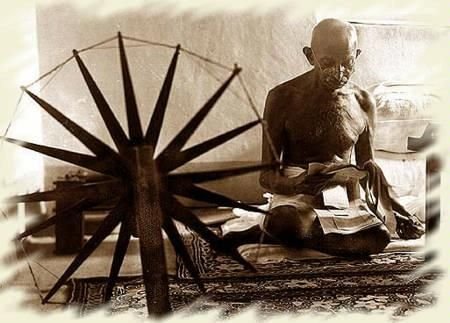
• Meaning of Satyagraha: Gandhi coined the term Satyagraha, combining the Sanskrit words “Satya” (truth) and “Agraha” (firmness or insistence). Satyagraha translates to “holding firmly to truth” or “truth force.” Unlike passive resistance, which might imply weakness, Satyagraha was a dynamic and active form of resistance that sought to change society through moral conviction.
• Moral Courage over Physical Force: Satyagraha rejected the idea of using physical force against an opponent. Instead, it emphasized moral courage, persuasion, and the power of truth. Gandhi believed that individuals practicing Satyagraha could appeal to the conscience of their oppressors and ultimately bring about change without violence.
• Self-Sacrifice and Suffering: A key tenet of Satyagraha was the willingness to endure suffering for a just cause. Gandhi argued that one must be prepared to make personal sacrifices in the pursuit of truth, as self-sacrifice demonstrated sincerity and commitment. This was seen in the form of hunger strikes, mass arrests, and marches—actions that demonstrated solidarity and resilience.
• A Means of Empowering the Oppressed: Satyagraha aimed to empower the marginalized and oppressed. Gandhi saw it as a way for the common people, who lacked military power or political influence, to resist injustice effectively. Through non-violent resistance, they could challenge powerful regimes and claim their rights with dignity and self-respect.
>> Application of Principles in major Movements
• Non-Cooperation Movement (1920–1922): The Non-Cooperation Movement was Gandhi’s first large-scale application of Satyagraha in India. In protest against British rule, he urged Indians to withdraw from British institutions, including schools, courts, and offices. Millions of Indians participated, refusing to support British rule, demonstrating the power of collective non-cooperation.
• Salt March and Civil Disobedience (1930): The Salt March (or Dandi March) was a major act of Satyagraha against the British salt tax. Gandhi and his followers marched over 240 miles to produce salt from seawater, openly defying British laws. This act of civil disobedience inspired millions across India to resist colonial laws through non-violent means, further highlighting the effectiveness of Satyagraha.
• Quit India Movement (1942): During World War II, Gandhi launched the Quit India Movement, demanding an immediate end to British rule. Although the movement saw violent clashes, Gandhi continued to emphasize non-violence as the ideal approach. The Quit India Movement became one of the largest and most intense displays of mass civil disobedience.
>> Impact of Gandhiji’s Principles on Global Movements
• Influence on Civil Rights Movements: Gandhi’s principles of truth, non-violence, and Satyagraha inspired leaders worldwide. Martin Luther King Jr. adopted non-violent resistance in the American Civil Rights Movement, drawing directly from Gandhi’s philosophy. Similarly, Nelson Mandela and the anti-apartheid movement in South Africa embraced Gandhi’s methods to fight for racial equality.
• Enduring Legacy of Non-Violence: Gandhi’s approach to political activism left a lasting legacy. The principles he championed demonstrated that non-violent resistance could be a powerful tool for social change, proving effective against seemingly insurmountable odds. Today, non-violent methods continue to influence movements for justice, environmental protection, and human rights.
4. Major Movements led by Gandhi in India
Mahatma Gandhi’s leadership in India’s freedom struggle was marked by transformative movements that reshaped not only the political landscape but also the collective conscience of the nation. These movements combined the principles of non-violence, truth, and Satyagraha with mass mobilization, giving millions of Indians a sense of purpose and a unified voice against British colonial rule. Below is an in-depth exploration of the major movements led by Gandhi:
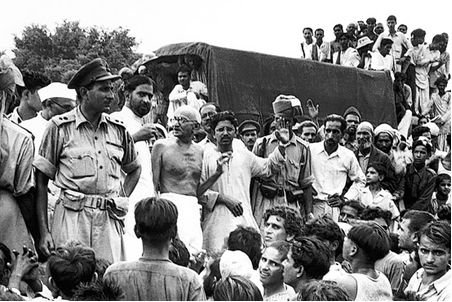
1. Champaran Satyagraha (1917): The First Civil Disobedience Movement: The Champaran Satyagraha was Gandhi’s first active involvement in Indian politics. It took place in Champaran, Bihar, where indigo farmers were being exploited by British planters under the Tinkathia system. Farmers were forced to grow indigo on a portion of their land and sell it at unfair prices.
Pic Credit: thebetterindia.com
- Gandhi’s Role:
- Gandhi, invited by local leaders, investigated the plight of the farmers.
- He mobilized the local population, encouraging them to resist the exploitative system peacefully.
- Methods:
- Conducted extensive surveys and listened to the grievances of farmers.
- Used Satyagraha (non-violent resistance) to demand the abolition of the Tinkathia system.
- Outcome:
- The British government agreed to abolish the system and improve farmers’ conditions.
- Champaran became a blueprint for future struggles, showcasing the effectiveness of mass non-violent resistance.
2. Kheda Satyagraha (1918): Supporting Farmers in Gujarat: In Kheda, Gujarat, farmers faced economic hardships due to crop failure caused by floods and famine. Despite their suffering, the British government demanded full payment of land revenue.
- Gandhi’s Role:
- Gandhi, alongside leaders like Sardar Vallabhbhai Patel, urged farmers to refuse payment of taxes until their demands for relief were met.
- He encouraged unity and non-violence among the farmers.
- Methods:
- Organized peaceful protests and strikes.
- Advocated for farmers to pledge that they would not pay taxes, even if threatened with confiscation of their land.
- Outcome:
- The British government eventually agreed to suspend revenue collection for the year.
- This success further strengthened Gandhi’s credibility as a leader of mass movements.
3. Non-Cooperation Movement (1920–1922): A Call for Self-Reliance: Triggered by the Jallianwala Bagh massacre (1919) and the repressive Rowlatt Act, Gandhi launched the Non-Cooperation Movement, encouraging Indians to reject British rule and embrace self-reliance.
- Key Objectives:
- Protest against British atrocities and demand Swaraj (self-rule).
- Strengthen Indian self-reliance by boycotting British goods and promoting indigenous products like khadi.
- Methods:
- Boycott of British schools, courts, titles, and goods.
- Promotion of spinning and weaving as symbols of self-reliance.
- Large-scale resignations from government jobs and institutions.
- Outcome:
- The movement united Indians across diverse regions and classes.
- However, it was abruptly called off by Gandhi in 1922 after the Chauri Chaura incident, where violent protesters killed police officers. Gandhi believed that the movement had deviated from non-violence.
- Despite its premature end, the movement demonstrated the power of mass non-violent resistance.
4. Salt March and Civil Disobedience Movement (1930–1934): A Fight for Economic and Political Freedom: The Salt March (Dandi March) was a protest against the British monopoly on salt production and taxation. Salt, a basic necessity, symbolized economic oppression.
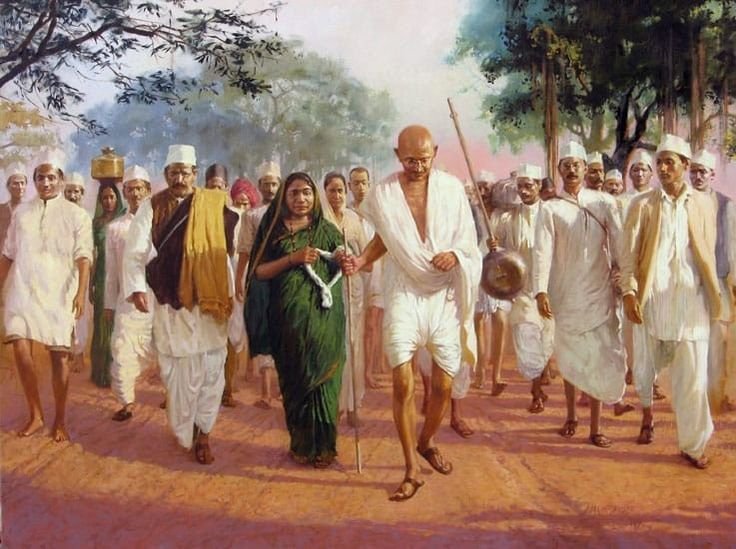
- The Salt March:
- Gandhi led a 240-mile march from Sabarmati Ashram to Dandi, where he and his followers made salt from seawater, defying British laws.
- The march garnered national and international attention, becoming a symbol of Indian defiance.
- Civil Disobedience Movement:
- The Salt March was part of a larger movement that involved refusing to pay taxes, boycotting British institutions, and picketing foreign goods.
- Outcome:
- The movement saw widespread participation, including women and rural communities.
- Thousands were arrested, including Gandhi.
- Although the movement did not immediately achieve its objectives, it greatly weakened British moral authority and inspired global anti-colonial movements.
5. Quit India Movement (1942): The Final Push for Freedom: During World War II, Gandhi launched the Quit India Movement, demanding an immediate end to British rule. It was a decisive step toward complete independence.
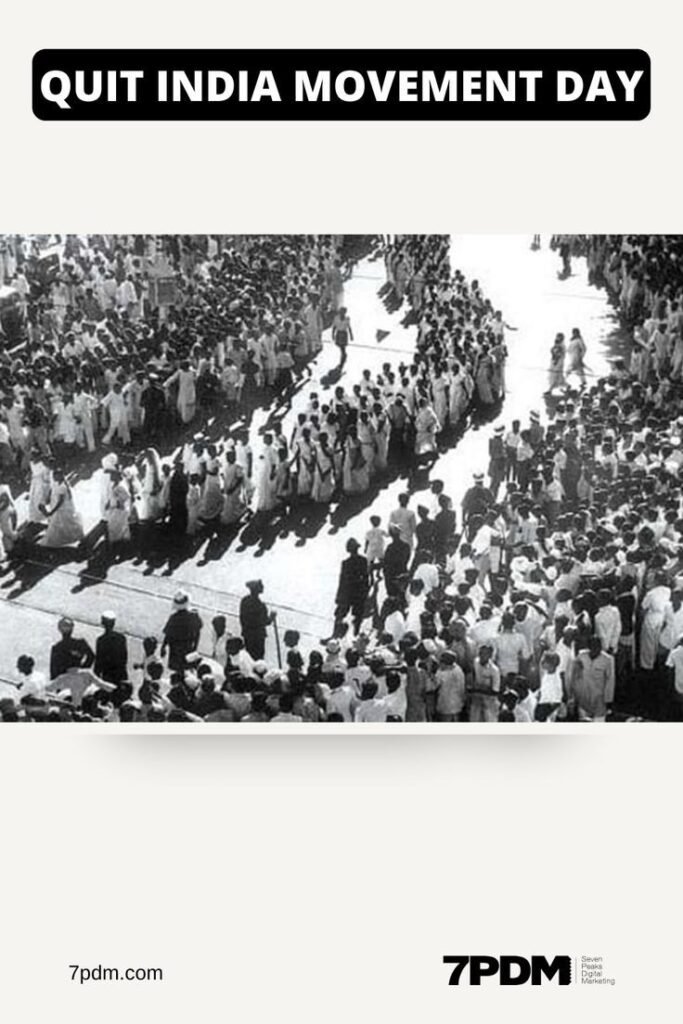
- Gandhi’s Call to Action: On August 8, 1942, Gandhi delivered the famous slogan, “Do or Die,” urging Indians to intensify their struggle for freedom.
- Methods:
- Organized protests, strikes, and acts of civil disobedience across the country.
- Encouraged Indians to refuse cooperation with the British administration.
- Outcome:
- The movement faced severe repression, with leaders (including Gandhi) arrested and communication networks disrupted.
- Despite British suppression, the movement created unprecedented unity and resolve among Indians.
- It marked the beginning of the end for British rule, as World War II further strained their resources and international pressure grew.
6. Khilafat Movement (1919–1924): Uniting Communities: The Khilafat Movement was launched by Indian Muslims to protest against the dismemberment of the Ottoman Empire and the abolition of the Caliphate after World War I.
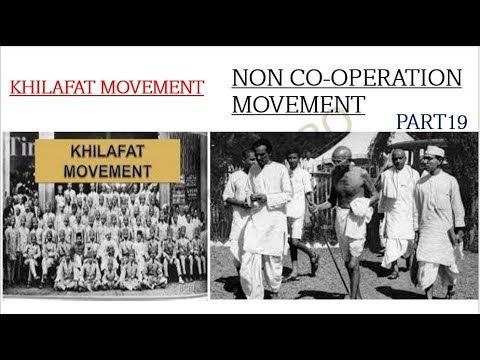
- Gandhi’s Role:
- Gandhi supported the Khilafat Movement as part of his strategy to unite Hindus and Muslims in the fight against British rule.
- He believed that solidarity between communities was essential for achieving independence.
- Methods:
- Encouraged participation in protests and non-cooperation with British authorities.
- Integrated the Khilafat cause with the Non-Cooperation Movement.
- Outcome:
- The movement initially strengthened Hindu-Muslim unity.
- However, it declined after the abolition of the Caliphate in 1924, and communal tensions resurfaced.
7. Constructive Programs and Long-Term Impact:
• Promotion of Khadi: Gandhi emphasized the spinning of khadi (hand-spun cloth) as a symbol of self-reliance and economic independence.
• Abolition of Untouchability: Gandhi’s campaigns, such as the Harijan movement, focused on social reform, particularly the eradication of untouchability.
• Empowerment of Women: Gandhi encouraged women to participate actively in freedom movements, recognizing their role in building a just society.
Legacy of Gandhi’s Movements:
• Mass Mobilization: Gandhi’s movements brought together Indians from diverse regions, religions, and classes, fostering a sense of unity and shared purpose.
• Shift in Tactics: By emphasizing non-violence and Satyagraha, Gandhi redefined the nature of resistance, making it a moral and ethical struggle rather than a violent confrontation.
• Global Inspiration: Gandhi’s strategies influenced civil rights leaders like Martin Luther King Jr. and Nelson Mandela, demonstrating the universal relevance of non-violent resistance.
• Path to Independence: While no single movement led to immediate independence, Gandhi’s campaigns cumulatively weakened British authority and prepared the nation for self-rule.
5. Last Years and Legacy of Mahatma Gandhi
The final years of Mahatma Gandhi’s life were marked by profound challenges, both personal and political, as he strived to ensure the success of India’s independence and unity. His legacy, built on his principles of truth, non-violence, and selfless service, continues to inspire individuals and movements worldwide. This detailed exploration sheds light on his last years and enduring influence.
- Partition of India and Gandhi’s Role: The end of British rule in 1947 came with the tragic partition of India into two nations: India and Pakistan. This division, based on religious lines, led to unprecedented violence between Hindus, Muslims, and Sikhs.
• Gandhi was deeply opposed to the idea of partition. He envisioned a united India where all communities could coexist peacefully.
• Despite his efforts to prevent division, the political climate and demands from leaders like Muhammad Ali Jinnah made partition inevitable.
• During the partition riots, Gandhi worked tirelessly to promote peace.
• He traveled to riot-affected areas, including Bengal, Delhi, and Bihar, urging Hindus and Muslims to abandon hatred and violence.
• Gandhi fasted multiple times, often risking his life, to bring communal harmony. His fasting in Calcutta during September 1947 helped end large-scale violence in the city. - Gandhi’s Vision for Independent India:
• Gandhi believed that independence was not just freedom from British rule but also a moral and spiritual transformation of society.
• He emphasized self-reliance, rural development, and economic equality as foundations for a just and sustainable nation.
• Abolition of Untouchability: Gandhi’s fight against untouchability continued until his last days. He referred to the marginalized as Harijans (“children of God”) and worked to integrate them into mainstream society.
• He also advocated for equal rights for women and the upliftment of the poor.
• Promotion of Religious Harmony: Gandhi believed that religion should unite, not divide. He saw spirituality as a means to foster mutual respect and understanding among different faiths. - Assassination of Mahatma Gandhi (January 30, 1948): Gandhi’s commitment to religious harmony, particularly his efforts to protect Muslim rights in India, angered some radical elements.
• The Tragic Day: On January 30, 1948, Gandhi was assassinated in Delhi by Nathuram Godse, a Hindu extremist who opposed his conciliatory stance towards Muslims and Pakistan.
• He was shot during his evening prayer meeting, and his last words were reportedly “Hey Ram” (Oh God).
• Nation in Mourning: Gandhi’s death shocked the world. Millions in India and across the globe mourned the loss of a leader whose life was dedicated to non-violence and truth. - Gandhi’s Enduring Legacy
>>A Global Influence
Non-Violence as a Universal Principle:
• Gandhi’s philosophy of Ahimsa (non-violence) inspired leaders worldwide, including:
• Martin Luther King Jr. in the American Civil Rights Movement.
• Nelson Mandela in the fight against apartheid in South Africa.
• Cesar Chavez, who championed labor rights in the U.S.
• His methods proved that peaceful resistance could bring about significant political and social change.
• Recognition:
• Gandhi was posthumously honored with the title “Father of the Nation” in India.
• His birthday, October 2nd, is celebrated as Gandhi Jayanti in India and recognized globally as the International Day of Non-Violence by the United Nations.
>> Impact on Indian Society
• Moral Leadership:
• Gandhi’s principles remain a moral compass for Indian democracy. His ideas of Swaraj (self-rule) emphasize grassroots governance and accountability.
• His campaigns for social equality continue to influence policies addressing caste discrimination, untouchability, and poverty.
• Economic Ideals:
• Gandhi’s advocacy for Khadi (hand-spun cloth) and village industries highlighted the importance of self-reliance and sustainable living.
• While India embraced industrialization post-independence, Gandhi’s vision of rural empowerment remains relevant in contemporary development debates.
>> Philosophy and Thought
• Truth and Satyagraha:
• Gandhi’s concept of Satyagraha (truth force) has been adapted in movements worldwide to resist injustice without resorting to violence.
• His writings on ethics, simplicity, and spirituality offer timeless guidance for individuals and societies seeking peace and harmony.
• Religious Harmony:
• Gandhi’s commitment to interfaith dialogue and respect for all religions set a standard for pluralism and tolerance in diverse societies.
>> Criticisms and Reflections
• While Gandhi is revered globally, some of his ideas and methods have been debated:
• Critics argue that his approach to non-violence may not have addressed the urgency of some situations.
• His opposition to industrialization is seen by some as impractical in a modern economy.
• Despite these critiques, Gandhi’s principles remain a source of inspiration for ethical leadership and peaceful resistance.
5.Gandhi’s Message for Future Generations:
• Strength through Non-Violence:
• Gandhi proved that non-violence is not a sign of weakness but a tool for moral and social strength.
• His life demonstrates the power of self-sacrifice and moral conviction in achieving lasting change.
• Living Simply:
• Gandhi’s lifestyle emphasized simplicity, self-discipline, and the rejection of materialism as pathways to spiritual fulfillment.
• Universal Relevance:
• In a world often divided by violence, greed, and inequality, Gandhi’s principles provide a timeless blueprint for building more inclusive, just, and peaceful societies.
Conclusion
The last years of Mahatma Gandhi’s life were a testament to his unwavering commitment to peace, unity, and justice. Despite the challenges of partition, communal violence, and personal sacrifices, he remained true to his ideals. His assassination marked the end of an era, but his teachings continue to guide and inspire. Gandhi’s legacy is not just Indian but universal, reminding humanity of the transformative power of truth, love, and non-violence.
*Disclaimer: All the images used in this story belonged to their owners. The credit goes to their respected rightful creators.
| #mahatma gandhi biography book, #about mahatma gandhi biography, #author of mahatma gandhi biography, #mahatma gandhi biography, #mahatma gandhi biography in english, #mahatma gandhi biography in hindi, #essay mahatma gandhi biography in english, #mahatma gandhi biography in gujarati, #autobiography mahatma gandhi biography in english, #mahatma gandhi biography in english in short |